Physical Address
MICKYWORLDNG
Physical Address
MICKYWORLDNG

MICKYWORLDNG IS READER-SUPPORTED. WHEN YOU BUY THROUGH LINKS ON OUR SITE, WE MAY EARN AN AFFILIATE COMMISSION AT NO EXTRA COST TO YOU.
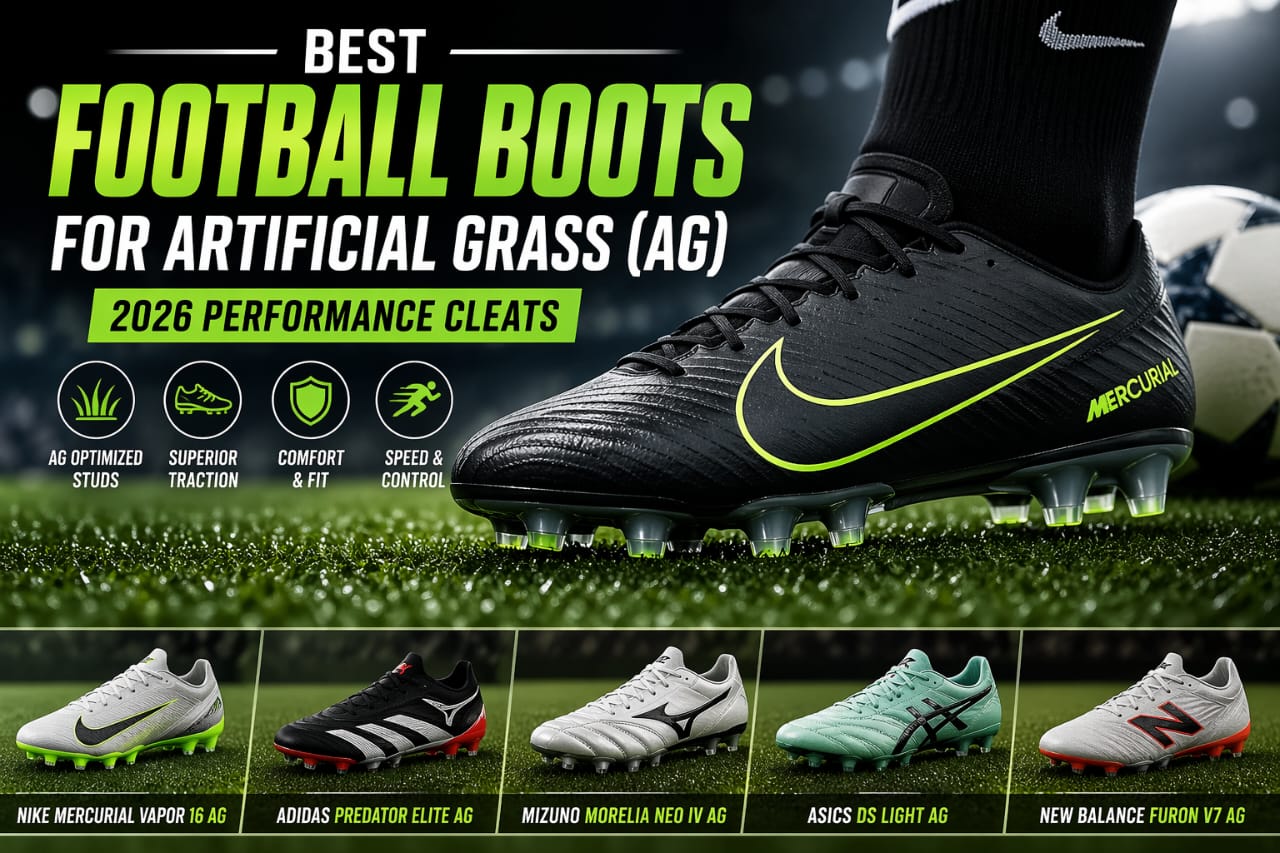
Best football boots for artificial grass are no longer just about choosing a popular brand or a nice design—they directly influence how you move, how comfortable you feel, and how safely you can perform on modern synthetic pitches. In 2026, most players are dealing with 3G and 4G artificial surfaces that behave very differently from natural grass, especially in terms of grip, friction, and overall responsiveness. The ball travels faster, your footing reacts differently, and every movement you make is slightly more demanding on your body. If your boots are not built for this environment, the difference shows immediately in your balance, your control, and your confidence during play.
One of the biggest mistakes players still make is assuming that any football boots will work on artificial grass, particularly Firm Ground (FG) boots that are designed for natural pitches. While they may feel acceptable during light use, the stud pattern is not made for synthetic surfaces, which creates uneven pressure and unreliable traction during matches. Over time, this leads to slower reactions, reduced turning ability, and a noticeable drop in performance when the game becomes intense. More importantly, it increases the risk of discomfort and long-term strain on your joints, which is something many players only realize after repeated use on turf. Choosing the right boots is not just a preference anymore—it is a requirement for consistent performance.

The reason artificial grass requires specific boots comes down to how your foot interacts with the surface during movement, particularly during quick transitions and directional changes. Unlike natural grass, where studs can penetrate and release easily, artificial turf creates more surface resistance because your boots sit on top rather than inside the ground. This increases friction, especially when turning or stopping suddenly, and if your studs are too aggressive, they can disrupt your balance or slow down your reactions. Over time, this constant resistance makes your movement feel less fluid and more controlled by the surface rather than by your ability. That is where the difference between the right and wrong boots becomes very clear.
Artificial Ground (AG) boots are specifically designed to solve this problem by adjusting how your foot connects with the turf without compromising your natural movement. Instead of long, aggressive studs, they use shorter, more evenly distributed studs that spread pressure across your foot and allow smoother rotation when turning. This reduces the risk of your foot getting stuck and helps maintain a natural flow during fast-paced actions, which is essential in modern football. The result is not just better comfort, but also more consistent performance across the entire match, especially when fatigue starts to set in. Once you switch to the correct type, the improvement is immediate and difficult to ignore.
Modern artificial pitches have improved in quality, but they have also become more physically demanding, particularly during high-intensity sessions where constant movement puts pressure on your feet and joints. The firmer surface means that impact is transferred more directly through your boots, and without the right soleplate design, this can lead to discomfort, fatigue, and reduced efficiency in your movement. Players who train regularly on turf will notice this more than anyone, because the effects build up gradually over time rather than appearing instantly. Choosing boots designed specifically for these conditions helps reduce that impact and allows you to maintain a higher level of performance consistently.
Another important factor is rotational movement, which is one of the most common situations where players experience difficulty on artificial grass. When you turn sharply, your boots must release from the surface smoothly, otherwise your foot remains planted while your body continues to move. This creates unnecessary stress on your knees and ankles, increasing the risk of strain and long-term injury. AG boots are designed to prevent this by allowing controlled release during rotation, which keeps your movement natural and reduces pressure on your joints. This is one of the key reasons they are strongly recommended for synthetic pitches in modern football.
From a performance perspective, having the right boots also improves your confidence during the game, especially in situations that require quick decisions and rapid movement. When you trust your footing, you can accelerate, stop, and change direction without hesitation, which is crucial in both attacking and defensive phases of play. Many players underestimate how much their performance is influenced by their equipment, but once the right setup is in place, the difference becomes obvious. Your focus shifts entirely to the game, and that clarity often leads to better decision-making and overall consistency on the pitch.

Understanding how boots affect your performance is just one part of building a complete setup, which is why it is important to also consider your overall equipment. If you want a full breakdown of what every player should be using, you can check this essential football gear guide, where everything is explained in detail beyond just boots.
Choosing the best football boots for artificial grass depends on your playing style, because different boots are designed to support different types of movement and control. Some players rely on speed and quick acceleration, while others focus more on control, passing, and maintaining stability during physical play. Understanding what you need from your boots helps narrow down the right options and prevents you from choosing something that works against your natural strengths. The goal is not just to buy a popular model, but to select a boot that enhances how you already play. This is where the right decision can make a noticeable difference over time.
Recommended Pick (Speed & Lightweight): Puma Ultra Ultimate FG/AG
View on Amazon
This boot is designed for players who depend on speed and quick movements, particularly in attacking roles where acceleration and sharp directional changes are essential. The lightweight construction allows for natural movement without restriction, while the FG/AG soleplate provides enough adaptability to perform effectively on artificial surfaces. It offers a balanced level of traction that supports quick transitions without creating excessive resistance during turns, which is crucial on turf. For players who want a fast, responsive feel under pressure, this type of boot delivers consistently across different match situations. It is a reliable option for modern artificial pitches.
Recommended Pick (Control & Comfort): Nike Tiempo Legend Elite
View on Amazon
This option is more suited to players who prioritize comfort and control, especially those who spend more time on the ball and need a consistent touch during play. The material adapts well to your foot, creating a natural feel that improves passing accuracy and ball handling under pressure. While it is traditionally designed for firm ground, its structure still provides a stable and supportive base that some players find comfortable on artificial surfaces when used correctly. It also offers a slightly cushioned experience, which can help reduce fatigue during longer matches and training sessions. This makes it a strong choice for players focused on control and stability.
Recommended Pick (Balanced Performance): Nike Mercurial Elite
View on Amazon
This boot provides a balanced combination of speed and control, making it suitable for players who need versatility across different phases of the game. It supports quick acceleration while maintaining enough stability for controlled movements, which is particularly useful in dynamic positions where roles change frequently. The responsive design allows you to react quickly without losing balance, helping you stay effective in both attacking and defensive situations. For players who prefer a flexible option that adapts to different styles of play, this boot offers a dependable middle ground. It performs consistently without forcing you into a specific playing approach.
Recommended Pick (Stability & Support): Adidas Predator Elite
View on Amazon
This boot is designed for players who want more control and stability during matches, particularly in situations where physical presence and ball retention are important. The structure provides a secure and locked-in fit, helping you stay balanced when making quick movements or receiving the ball under pressure. On artificial surfaces, that stability becomes even more valuable because the ground reacts differently compared to natural grass, and your boots need to compensate for that difference. The soleplate offers enough flexibility to adapt to turf conditions while still maintaining a strong base, which allows you to move confidently without feeling restricted. For players who rely on positioning, strength, and control, this type of boot provides a reliable and consistent experience throughout the game.
Recommended Pick (Comfort & Durability): Adidas Copa Pure
View on Amazon
This option focuses on long-term comfort and durability, making it particularly suitable for players who train frequently on artificial grass and need boots that can handle repeated use without breaking down quickly. The softer upper adapts naturally to the shape of your foot, which improves overall comfort and creates a more consistent touch on the ball during matches. On firmer surfaces, this kind of comfort becomes even more noticeable because it helps reduce the impact you feel with every step, especially during longer sessions. Unlike lighter speed boots, this model prioritizes stability and structure, ensuring that performance remains consistent even after extended use. For players who value reliability and comfort over time, this is a strong and practical choice.
The best football boots for artificial grass are not simply the most expensive or most popular options, but the ones that align with your playing style, your environment, and how your body responds during movement on synthetic surfaces. When your boots are properly matched to the pitch, your movement becomes more natural, your reactions become quicker, and your overall performance improves without you needing to think about it consciously. On the other hand, using the wrong type of boots creates small inefficiencies that build up over time, affecting your balance, your confidence, and your ability to perform consistently in key moments. That is why this decision should always be approached with a clear understanding of what actually works for your situation rather than just following trends.
If you play regularly on artificial turf, investing in the right boots is one of the most effective ways to improve both your performance and your long-term comfort on the pitch. It is not about choosing what looks good or what others are wearing, but about understanding what supports your movement and helps you play at your best level consistently. Once you find that balance, you stop thinking about your boots entirely, and your focus shifts fully to the game, which is where real improvement begins. Over time, that consistency becomes part of your performance, and that is what separates players who struggle with their setup from those who perform confidently every time they step onto the pitch.
Can you wear FG boots on artificial grass?
While it is possible to wear FG boots on artificial grass occasionally, it is not recommended for regular use because the stud design is not suited for synthetic surfaces and can create excessive pressure on your joints. Over time, this can lead to discomfort and increase the risk of strain, especially during quick turns and sudden movements. Players who use FG boots frequently on turf often notice reduced comfort and less stable footing during matches. For consistent performance and safety, using boots designed specifically for artificial grass is always the better option.
Are AG boots better than FG boots?
For artificial grass, AG boots are specifically designed to perform better because they use shorter, more evenly distributed studs that reduce pressure and allow smoother movement on turf. This design helps improve both comfort and safety during matches, especially when playing on modern 3G and 4G surfaces. FG boots are still effective on natural grass, but they do not provide the same level of control and adaptability on artificial pitches. Choosing AG boots ensures that your movement feels more natural and less restricted during play.
Do AG boots reduce injury risk?
AG boots help reduce injury risk by allowing your foot to rotate more naturally during movement, which prevents the “stuck” feeling that can happen with more aggressive stud patterns. When your foot releases smoothly from the surface, there is less strain placed on your knees and ankles during turns and quick transitions. This does not eliminate risk entirely, but it significantly improves how your body handles movement on artificial turf. Over time, this can make a noticeable difference in both comfort and long-term joint health.
What is the difference between AG and turf boots?
AG boots are designed for modern artificial grass surfaces like 3G and 4G pitches, where the turf includes rubber infill and allows for more natural movement. Turf boots, often labeled as TF, are better suited for older, harder surfaces where the ground is flatter and less forgiving. The main difference lies in the sole design, as turf boots use smaller rubber studs for grip on hard ground, while AG boots are built to handle deeper synthetic layers. Choosing the correct type depends on the surface you play on most frequently.
How long do AG boots last on artificial grass?
High-quality AG boots are built to withstand the increased friction of artificial surfaces, which means they generally last longer than standard boots when used correctly. However, durability still depends on how often you play and how well you take care of them after use. Regular cleaning and proper storage can help maintain their condition and extend their lifespan significantly. Investing in a durable pair ensures that your performance remains consistent over time without needing frequent replacements.