Physical Address
MICKYWORLDNG
Physical Address
MICKYWORLDNG

MICKYWORLDNG IS READER-SUPPORTED. WHEN YOU BUY THROUGH LINKS ON OUR SITE, WE MAY EARN AN AFFILIATE COMMISSION AT NO EXTRA COST TO YOU.
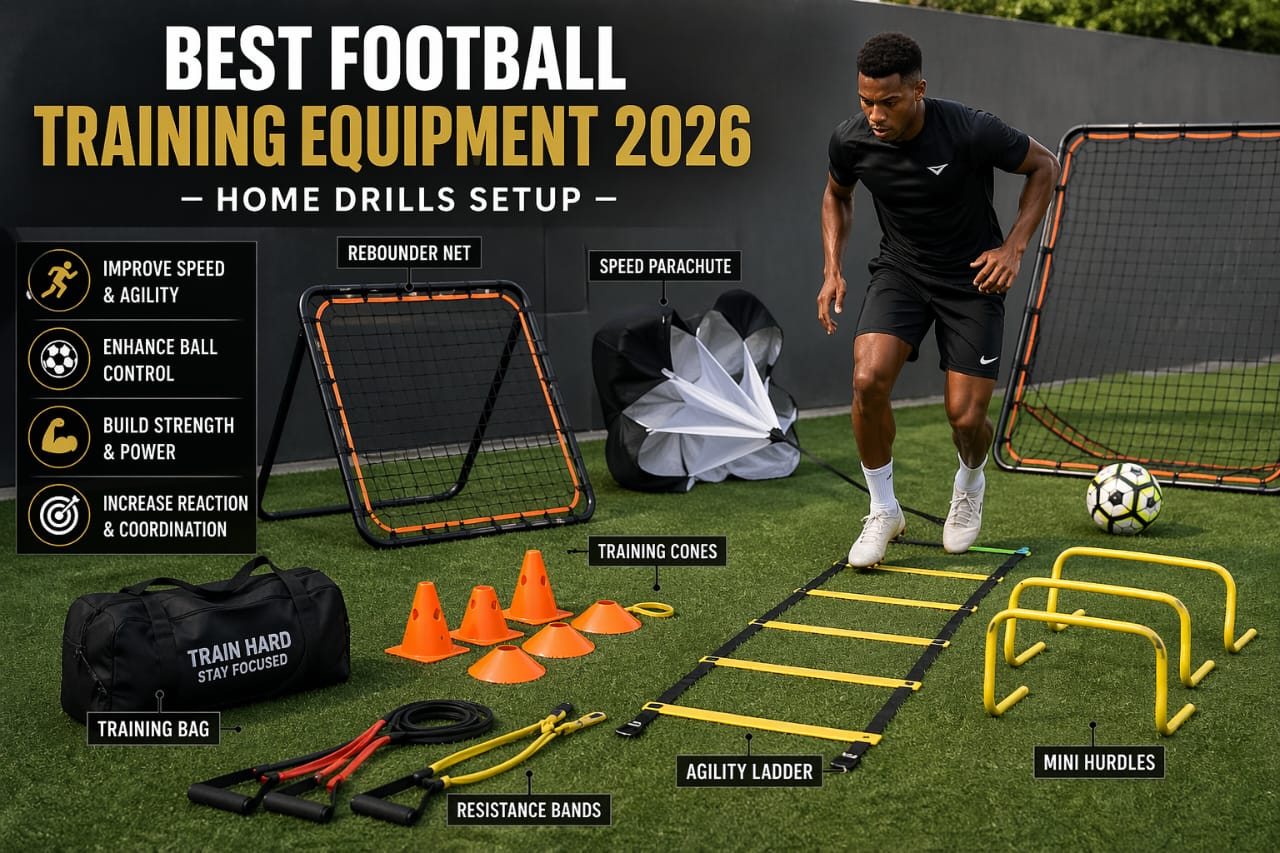
Best football training equipment 2026 is what separates players who train consistently from those who keep repeating the same drills without real improvement. If your training is not improving your touch, movement, or reaction speed, the problem is not effort—it is structure. Modern football training is built around using the right tools to simulate real match situations at home, helping you improve football skills at home with purpose instead of guesswork.
At its core, an effective training setup includes a rebounder to sharpen your first touch and reactions, an agility ladder to improve footwork and coordination, cones to structure movement patterns, resistance tools to build acceleration and strength, and a goal to simulate real finishing scenarios. When these are combined properly, they create a complete training environment that improves both your technical ability and physical performance without requiring a full team setup.
Many players spend hours training but still struggle to see noticeable improvement, and this usually comes down to how they train rather than how often. When your sessions lack structure, you end up repeating basic drills that do not challenge your coordination, decision-making, or physical output. The right equipment changes this completely because it introduces variation, resistance, and realistic movement patterns that force your body to adapt continuously. Over time, this leads to sharper reactions, better control, and more efficient movement during matches, which is what ultimately separates consistent performers from average players.
If you have already understood how important the right gear is from this football boots guide for artificial grass, then you already know that performance is not just about skill—it is about how your body interacts with the game. Training equipment extends that idea further by helping you develop the physical and technical aspects of your performance in a controlled environment. Instead of relying only on match experience, you can now build specific skills deliberately and consistently, which is what leads to long-term improvement.
Another factor that often gets overlooked is how training equipment allows you to train alone without losing effectiveness. Not every player has access to teammates or structured coaching sessions every day, which is why having the right tools at home becomes extremely valuable. With a proper setup, you can work on your first touch, your movement patterns, your acceleration, and even your finishing without needing a full team environment. This independence gives you the ability to train consistently on your own terms, which is one of the biggest advantages for players who want to improve faster.
The difference between traditional training and modern training lies in how equipment is used to simulate real match conditions rather than isolated drills. Football is unpredictable, fast, and constantly changing, which means your training must prepare you for reacting to different situations rather than repeating fixed movements. Modern training tools are designed to create that variability by forcing you to adjust your body position, timing, and decision-making during every repetition.
When you train with the right equipment, you are not just improving a single skill—you are improving how multiple skills work together under pressure. For example, controlling a rebounded ball is not just about technique; it involves balance, reaction speed, positioning, and awareness. This combination of factors is what makes training more realistic and more effective, because it mirrors what actually happens during matches.
Best Tool for Ball Control: ZEALFEEL Soccer Rebounder Net
View on Amazon
A rebounder allows you to repeat actions continuously while still introducing variation in every touch, which is something static drills cannot replicate. You can train short passes, long passes, volleys, and quick reactions within a limited space, making it one of the most efficient tools for solo development. Over time, this type of training improves consistency, sharpens your reactions, and builds confidence when receiving the ball under pressure, which directly translates into better performance during matches.
I noticed this myself when training alone—once I added a rebounder to my home football training setup, my first touch improved much faster compared to just passing against a wall.
What makes this even more valuable is the unpredictability it introduces. Unlike a wall pass that returns the ball in a predictable way, a rebounder creates slight variations in speed, angle, and bounce, forcing you to adjust quickly. This small difference plays a huge role in developing real match readiness, because football rarely presents you with perfect, predictable situations.
Movement is one of the most important aspects of football, yet it is often trained in a way that does not reflect real match situations. Straight-line running and basic drills do not prepare you for the constant changes of direction, balance adjustments, and quick reactions required during a game. This is where agility-focused equipment becomes essential, because it trains your body to move efficiently in unpredictable situations while maintaining control and balance.
Agility ladders are particularly effective because they focus on coordination, rhythm, and precision rather than just speed. When used properly, they help you develop efficient movement patterns that reduce wasted energy and improve your ability to react quickly. This is especially important in tight spaces where quick footwork can determine whether you keep possession or lose the ball under pressure.

Best Tool for Footwork: SKLZ Speed & Agility Ladder
View on Amazon
This ladder helps build quick feet and coordination through structured drills that challenge your timing, balance, and control. As your body adapts, your movement becomes smoother and more efficient, allowing you to react faster during matches without overthinking your steps. It is a simple tool, but when used consistently, it creates noticeable improvements in how you move across the pitch.
To make movement training more realistic, cones are used to create structured patterns that simulate real match scenarios. Instead of moving randomly, you follow specific paths that improve your ability to control the ball while changing direction. This type of training combines technical skill with physical movement, which makes it more effective than training each aspect separately.
This is why many players are building a complete football training equipment at home setup instead of relying only on team sessions. Combining tools like ladders, cones, and resistance bands creates a home football training setup that improves coordination, balance, and decision-making at the same time while supporting effective football drills equipment routines.
Best Tool for Drill Setup: Agile Soccer Training Cones (60 Pack)
View on Amazon
Cones provide the structure needed to organise drills in a way that improves both control and awareness. Whether you are working on dribbling, turning, or positioning, they create clear patterns that help you focus on specific movements instead of training without direction. Over time, this structured approach leads to better decision-making and improved spatial awareness during matches.
If you also want to understand how your overall setup connects with protection and performance, this football shin guards guide explains how different gear works together during matches.
Equipment |
Main Benefit |
Best For |
Impact on Performance |
|---|---|---|---|
Rebounder |
Improves first touch and reaction |
Ball control training |
Sharper control under pressure |
Agility Ladder |
Enhances coordination and foot speed |
Movement drills |
Faster, more efficient direction changes |
Cones |
Structures drills and movement patterns |
Dribbling and positioning |
Better control and spatial awareness |
Resistance Tools |
Builds strength and acceleration |
Speed and power training |
Improved explosiveness and sprint ability |
Goal |
Creates realistic finishing practice |
Shooting drills |
Better match finishing and accuracy |
A table alone does not show the full picture. A rebounder improves control, but without movement training from an agility ladder, that control becomes limited in real match situations. Cones structure drills, but without resistance training, it is harder to apply those movements at speed. The best football training equipment 2026 works as a system, combining technical and physical development for real performance.

Having the best football training equipment 2026 is not just about owning the right tools—it is about how you combine them into a system that actually improves your performance. Many players make the mistake of using each piece of equipment separately without understanding how they connect, which leads to slow or inconsistent progress. A proper training system links your technical skills, movement, and physical development together so that everything improves at the same time rather than in isolation.
The most effective way to structure your training is to divide it into three connected phases: control, movement, and execution. Each phase builds on the previous one, creating a natural progression that mirrors how actions happen during a match. You start with ball control and reactions, move into dynamic movement and coordination, and finish with realistic execution such as passing, shooting, or decision-making under pressure. This approach ensures that your training sessions feel purposeful instead of repetitive.
For example, a simple but highly effective session could begin with rebounder work to activate your touch and reactions, followed by ladder and cone drills to improve movement patterns, and then finished with speed or resistance training to develop explosiveness. This combination forces your body to adapt across multiple areas within a single session, which is exactly how real football situations unfold.
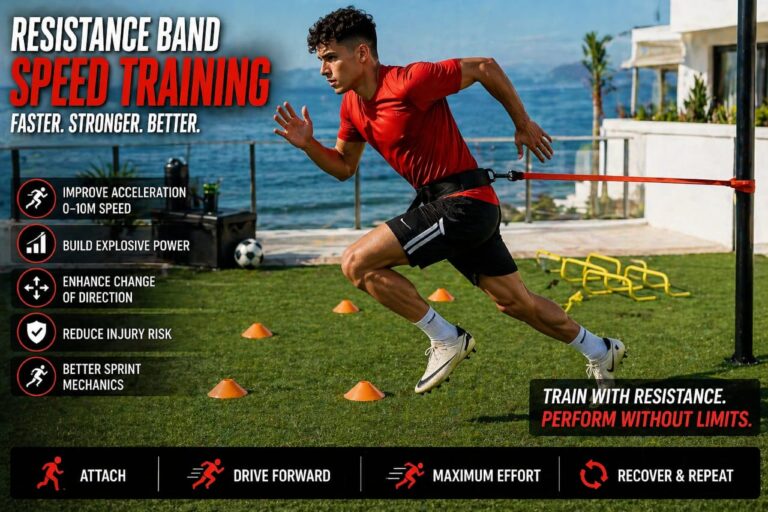
Speed in football is not just about how fast you can run in a straight line—it is about how quickly you can accelerate, decelerate, and change direction while maintaining control. This is why resistance-based training has become an important part of modern football development, because it strengthens the muscles responsible for explosive movement while improving overall balance and stability.
When you introduce resistance into your training, your body is forced to work harder during each movement, which increases strength and power over time. Once the resistance is removed, your movements feel lighter and faster, which directly improves your performance on the pitch. This is particularly noticeable in your first few steps, which are often the most important in winning duels, creating space, or reacting to situations.
Best Tool for Speed & Power: MYOSOURCE Acceleration Speed Resistance Trainer
View on Amazon
This type of resistance trainer is designed to improve acceleration by adding controlled resistance to your sprinting movements. It forces your muscles to generate more power during each step, which leads to stronger and faster acceleration over time. When used consistently, it helps improve your ability to explode into space, recover quickly, and maintain speed during transitions, which are all critical aspects of modern football.
What makes resistance training particularly effective is that it does not just improve speed—it also reduces the risk of injury by strengthening key muscle groups involved in movement. Stronger muscles provide better support for your joints, which helps you maintain stability during sharp turns, sudden stops, and high-intensity actions. This means you are not only improving performance but also building durability for long-term consistency.
One of the biggest limitations of home training is the lack of realistic match situations, especially when it comes to finishing and decision-making. Without a proper target or structure, shooting practice often becomes repetitive and lacks purpose. This is where adding a goal to your setup makes a significant difference, because it allows you to simulate real match scenarios and develop your finishing under more realistic conditions.
Training with a goal changes how you approach your drills because it introduces direction, accuracy, and pressure into your actions. Instead of simply striking the ball, you begin to focus on placement, timing, and execution, which are all critical elements of finishing during matches. Over time, this helps you become more confident in front of goal because your training starts to reflect real-game situations.
Best High-Ticket Training Tool: QUICKPLAY GS Soccer Goal
View on Amazon
This type of goal transforms your training environment by creating a realistic target for shooting and finishing drills. It allows you to practice different types of shots, angles, and scenarios, which improves both your accuracy and decision-making in attacking situations. More importantly, it adds a sense of purpose to your training sessions, making them feel closer to real match play rather than isolated practice.
When combined with other equipment like cones and rebounders, a goal allows you to build full training sequences that replicate actual game situations. For example, you can start with a control drill, move into a dribbling pattern, and finish with a shot on goal, all within a single structured routine. This type of training is far more effective than practicing each skill separately because it mirrors how actions happen during a match.
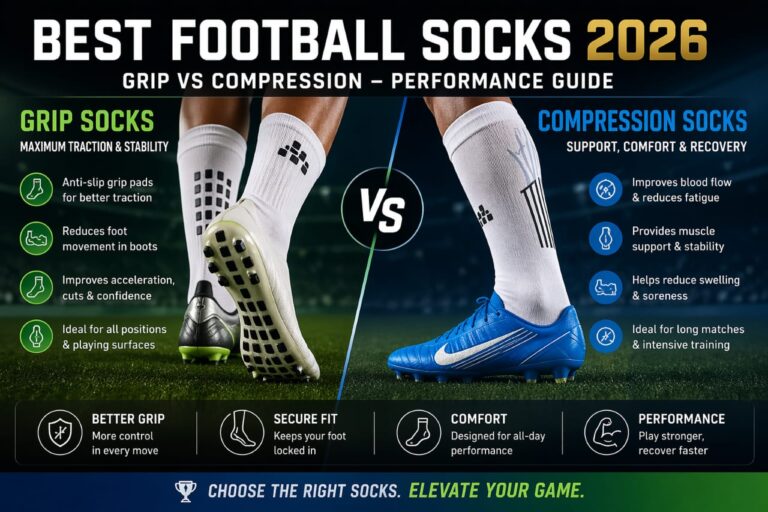
If you want to complete your setup and understand how small details affect performance, this football socks guide explains how stability and comfort inside your boots influence your movement during games.
The real value of football training equipment comes from how you combine it rather than how many tools you own. A simple but well-structured setup will always outperform a large collection of equipment used without purpose. The key is to focus on progression, consistency, and quality rather than trying to do everything at once.
A complete session should flow naturally from one phase to another, starting with technical activation, moving into dynamic movement, and finishing with execution under pressure. This creates a training rhythm that keeps your body engaged while developing multiple aspects of your game at the same time. Over time, this approach leads to noticeable improvements because every session builds on the previous one.
It is also important to pay attention to how your body responds to training, because improvement does not come from doing more but from doing things correctly. Small adjustments in how you perform drills, how you control the ball, or how you move can make a significant difference over time. The right equipment supports these adjustments by providing structure and consistency, which helps you refine your technique gradually.
What is the most important football training equipment?
A rebounder is one of the most important tools because it improves first touch, reaction speed, and ball control, which are essential in every position.
Can you improve football skills at home?
Yes, with the right equipment and structured training, you can develop control, movement, speed, and finishing effectively at home.
How often should you train with equipment?
Consistency is more important than frequency, but training 3–5 times per week with structured sessions produces the best results.
Is expensive equipment necessary?
Not always, but high-quality equipment can improve training efficiency and provide more realistic match scenarios.
Does training equipment improve match performance?
Yes, when used correctly, it helps develop skills that transfer directly into matches, improving overall performance.
The best football training equipment 2026 is not defined by how advanced or expensive it is, but by how effectively it helps you train with purpose and consistency. When your training is structured, every session becomes an opportunity to improve rather than just repeat actions. The right combination of tools allows you to develop your skills, movement, and physical performance in a way that directly translates into matches.
Over time, the difference becomes clear—not just in how you play, but in how confident and consistent you feel on the pitch. When your training environment supports your development, improvement becomes a natural result rather than something you chase. That is what separates players who train occasionally from those who continue to grow and perform at a higher level.
In 2026, players are no longer waiting for perfect training conditions—they are building their own systems. The best football training equipment 2026 allows you to train smarter, improve faster, and stay consistent whether you are training alone or on the pitch.