Physical Address
MICKYWORLDNG
Physical Address
MICKYWORLDNG

MICKYWORLDNG IS READER-SUPPORTED. WHEN YOU BUY THROUGH LINKS ON OUR SITE, WE MAY EARN AN AFFILIATE COMMISSION AT NO EXTRA COST TO YOU.
Best football shin guards 2026 are no longer just about basic protection—they play a direct role in how comfortable you feel, how freely you move, and how confident you are when going into challenges. The modern game is faster, more physical, and far more demanding than it used to be, which means every piece of equipment now has to support performance, not just safety. Shin guards sit at the centre of that balance because they are involved in almost every physical moment on the pitch. When they feel right, you move naturally without thinking about them, but when they are wrong, they become a constant distraction that affects your focus, your timing, and even your willingness to commit in challenges.
Most players do not realise how much shin guards influence their performance until they experience the difference between the wrong and the right type during a match. Some options feel too bulky and slow you down slightly, especially when you are trying to accelerate or change direction quickly. Others feel so minimal that you start hesitating in physical situations because you do not fully trust the protection they provide. This is where the choice between lightweight and protection becomes more than just a preference—it becomes a performance decision. Your position, your playing style, and the level of competition you are involved in all shape what type of shin guard will actually work for you over time.

If you have already gone through the full breakdown in essential football gear guide, you will understand that football equipment works best when everything connects as a system rather than as separate items. Shin guards may seem like a small part of that system, but they directly influence how confident you feel when the game becomes physical. When you trust your protection, you commit fully to tackles, challenges, and blocks without hesitation, and that alone can elevate your performance. Confidence in your gear removes doubt from your decision-making, which is something most players overlook.
Another important detail that often gets ignored is how shin guards interact with your boots and socks during a match. If your setup does not work together properly, small issues start to appear—slipping guards, discomfort, or constant adjustments that break your concentration. These might seem minor at first, but over ninety minutes they build into real performance problems. This is why players who take their full setup seriously tend to perform more consistently than those who treat gear as an afterthought. If you have not yet looked at how your boots affect movement and stability, this football boots guide for artificial grass explains how everything connects on the pitch.
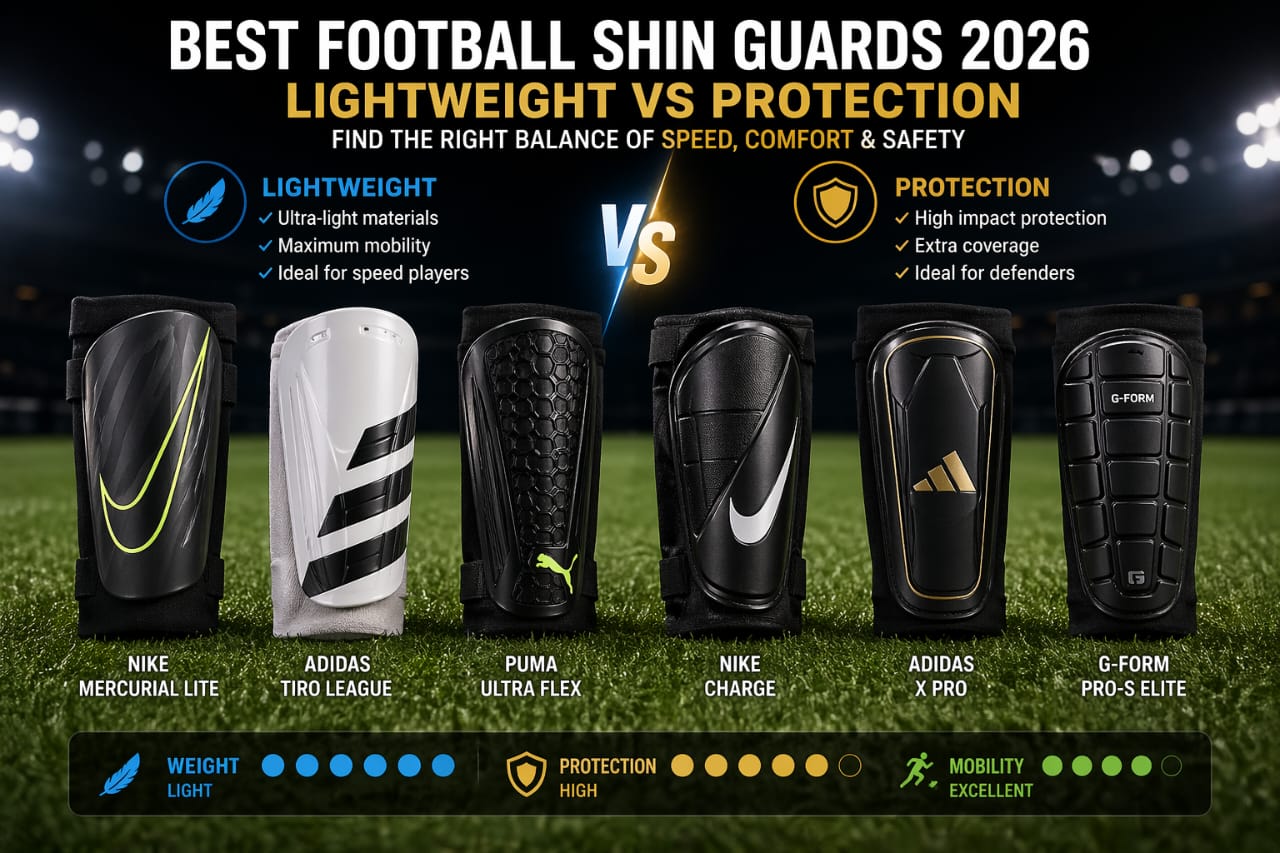
The biggest decision when choosing shin guards comes down to how much protection you need compared to how much freedom of movement you want during a match, and this is where most players struggle to make the right call. Lightweight shin guards are designed to stay out of your way, allowing you to move quickly, turn sharply, and react without feeling restricted by your equipment. This is why they are popular among attacking players who rely heavily on speed, agility, and quick changes of direction. They sit closer to the leg, reduce bulk, and create a natural feel that supports fluid movement throughout the game.
However, that lightweight design comes with a trade-off, because reducing bulk usually means reducing impact absorption as well. In less physical matches, this might not be noticeable, but in more competitive environments where tackles are stronger and contact is more frequent, the difference becomes clear. This is where protective shin guards come in, offering stronger coverage and better impact resistance during challenges. These are often preferred by defenders or players who are constantly involved in physical duels, where the risk of contact is higher and protection becomes more important than pure speed.

What makes the decision more interesting in 2026 is that modern shin guards are no longer strictly one or the other. Many designs now aim to combine both elements, offering enough protection without adding excessive weight. This creates a middle ground that works for most players, especially those who want consistency across different types of matches. Instead of switching between lightweight and protective options, they can rely on one setup that performs well in both scenarios. This balance is often the most practical choice for players who want reliability without overthinking their gear.
The key is understanding your role on the pitch and how often you are exposed to physical contact. If your game is built around speed and movement, going too heavy can limit your natural style. If your game involves frequent challenges, going too light can leave you exposed in important moments. The right choice is always the one that allows you to play your natural game without hesitation, because hesitation is what usually leads to mistakes during matches.
Shin Guard Type |
Best For |
Key Benefits |
Limitations |
|---|---|---|---|
Lightweight (Slip-In) |
Wingers, Attackers, Fast Players |
Very light, allows quick movement, minimal distraction |
Less impact protection in physical tackles |
Balanced (Sleeve Fit) |
Midfielders, All-Round Players |
Good mix of comfort and protection, stays secure during play |
Not as light as slip-in, not as strong as full protection |
High Protection (Padded/Advanced) |
Defenders, Physical Players |
Strong impact absorption, better coverage, more confidence in duels |
Slightly heavier, can feel bulkier during fast movement |
Ankle Shin Guards |
Beginners, Youth Players |
Extra ankle protection, easy to wear, secure fit |
Restricts movement slightly, less popular at higher levels |
Choosing the right shin guards becomes much easier when you match them to how you actually play, rather than simply picking what looks popular or widely used. Different designs are built to support different styles of play, and understanding this helps you avoid making a choice that works against you on the pitch. The goal is not just to protect yourself, but to enhance your movement, your confidence, and your overall performance throughout a match.
Recommended Pick (Lightweight & Speed): Nike Mercurial Lite Shin Guards
View on Amazon
This option is built for players who prioritise speed and freedom of movement above everything else during a match, especially those who rely on quick acceleration and sharp directional changes to create space. The low-profile design allows it to sit close to your leg without adding unnecessary bulk, which makes it feel almost invisible during play. This helps maintain a natural rhythm when running and turning, allowing you to focus fully on your performance rather than your equipment. It is particularly suited for wingers and attacking players who value agility over physical protection.
Recommended Pick (Balanced Fit & Stability): Adidas X Pro Shin Guards
View on Amazon
This option provides a well-balanced combination of comfort, stability, and protection, making it suitable for players who want reliability across different match situations. The inclusion of sleeves helps keep the shin guards securely in place, which reduces the need for constant adjustment and improves overall consistency during play. It offers enough protection to handle physical moments while still maintaining a lightweight feel that supports natural movement. This makes it a practical choice for midfielders and all-around players who need both control and mobility.
Recommended Pick (Maximum Protection): G-Form Pro-X3 Shin Guards
View on Amazon
This option is designed for players who prioritise protection and want to feel secure during physical challenges throughout the match, especially in competitive environments where contact is unavoidable. The material is engineered to absorb impact effectively while remaining flexible during movement, which allows it to protect without feeling overly rigid. It provides a higher level of confidence in tackles and defensive situations, making it ideal for players who are frequently involved in physical duels. While it may feel slightly more noticeable than lightweight options, the added protection makes it a reliable choice where safety is a priority.
One of the most common decisions players face when choosing shin guards is whether to go for slip-in or ankle-supported designs, and this choice often has a bigger impact on comfort and performance than many expect. Slip-in shin guards are built for simplicity and freedom, allowing players to move without feeling restricted by bulky equipment. They rely on tight socks or compression sleeves to stay in place, which creates a cleaner and more natural feel during matches. This is why they are widely used at higher levels of football, where speed, agility, and quick reactions are essential to performance.
Because slip-in shin guards are designed to be lightweight and minimal, they are particularly suited to players who depend on movement rather than physical strength to influence the game. Wingers, attacking midfielders, and full-backs often prefer this type because it allows them to accelerate, turn, and change direction without any extra resistance. The reduced bulk also means fewer distractions during play, which helps maintain focus in fast-paced situations. However, this lighter design also means they offer less coverage, which can become noticeable in more physical matches where contact is unavoidable.
Ankle shin guards take a different approach by adding extra protection around the ankle area, which can be useful for players who are still developing confidence in physical situations or who prefer additional security during play. They usually come with built-in straps and padded ankle support, making them easier to wear without the need for separate sleeves. This makes them a popular choice for younger players or beginners who want a more secure and straightforward setup. The added coverage provides reassurance, especially in games where tackles are less controlled.
However, the trade-off with ankle shin guards is that they tend to feel bulkier and slightly more restrictive, particularly during high-speed movement. Players who rely on agility may notice that this extra structure affects their natural rhythm, especially during quick transitions. Over time, many experienced players move away from ankle-supported designs in favour of lighter options that allow greater freedom. The choice ultimately comes down to what makes you feel comfortable and confident on the pitch, because confidence plays a major role in how you perform.
Shin guard design has evolved significantly in recent years, and in 2026 most models are built using a combination of materials rather than relying on a single rigid structure. Traditional designs focused heavily on hard plastic shells that provided strong impact resistance but often felt uncomfortable during extended use. Modern shin guards now combine these outer shells with softer inner layers that help absorb shock and distribute pressure more evenly across your leg. This creates a more balanced experience where protection does not come at the expense of comfort.
One of the most noticeable improvements is the introduction of flexible materials that respond to impact, allowing the shin guard to remain comfortable during normal movement while becoming more rigid when force is applied. This type of technology is particularly useful for players who are constantly moving, as it allows them to maintain a natural feel without sacrificing protection. It reduces the stiff, restrictive sensation that older designs often created, making it easier to play freely throughout the match. While not every player actively looks for this feature, it represents how far modern football gear has progressed.
Breathability has also become a key focus, especially for players who train or play regularly in demanding conditions. Improved ventilation helps reduce heat and sweat buildup, which can otherwise lead to discomfort and distraction during matches. At the same time, better shaping and ergonomic design ensure that shin guards fit more naturally along the curve of your leg, reducing movement and improving stability. These improvements may seem subtle, but they make a noticeable difference over time, particularly during longer sessions where comfort becomes increasingly important.
Durability is another factor that cannot be ignored, as shin guards are exposed to repeated impact and friction during both training and matches. Higher-quality materials maintain their structure over time, ensuring that the level of protection remains consistent even after extended use. Cheaper options may lose their shape or effectiveness more quickly, which can affect both comfort and safety. Investing in a well-built shin guard helps ensure that your performance remains stable across multiple games without needing frequent replacements.
Choosing the correct size is just as important as selecting the right type of shin guard, because even the best design will not perform effectively if it does not fit properly. Shin guards should cover the area from just below your knee to just above your ankle without interfering with your natural movement. If they are too small, they leave parts of your shin exposed, increasing the risk of injury during tackles. If they are too large, they can feel uncomfortable and may shift out of position, creating unnecessary distractions during play.
Fit is not just about size—it is also about how securely the shin guards stay in place throughout the match. Slip-in guards often rely on compression sleeves or tight socks to hold them firmly, while other designs use straps or built-in supports for added stability. A secure fit ensures that your shin guards remain in the correct position during movement, especially during sprints, tackles, and sudden changes of direction. This stability allows you to focus entirely on your performance without constantly adjusting your gear.
Comfort over time is another important factor to consider, because shin guards that feel fine at the start of a match may become uncomfortable as fatigue sets in. Pressure points, poor ventilation, or improper fit can all become more noticeable as the game progresses, affecting both your focus and your movement. Testing your shin guards during training sessions is one of the best ways to understand how they perform over longer periods. This helps you identify any issues early and ensures that your setup remains reliable during competitive matches.
It is also worth considering how your shin guards interact with your socks and overall setup, as a well-coordinated system reduces distractions and improves consistency. When everything fits together properly, your equipment feels like a natural extension of your body rather than something you need to manage constantly. This level of comfort and stability is what allows you to perform confidently across different match situations.
The best football shin guards in 2026 are not defined by a single feature, but by how well they match your playing style, your environment, and your level of competition. Whether you prefer lightweight options for speed or more protective designs for physical play, the goal is always the same—to find something that allows you to perform without hesitation. When your gear supports your movement and gives you confidence in physical situations, your overall performance improves naturally. That is what separates a good choice from a truly effective one.
Taking the time to understand what works for you is one of the simplest ways to improve your consistency on the pitch. Shin guards may seem like a small detail, but they influence how you approach key moments in a match, especially those involving contact and pressure. Once you find the right balance between comfort and protection, your focus shifts entirely to the game, and that is when your performance becomes more natural and controlled. That consistency is what every player is ultimately aiming for.
Are lightweight shin guards safe?
Lightweight shin guards are safe for general play, especially for players who are less involved in physical challenges, but they may not provide the same level of impact absorption as more protective designs in competitive matches.
Do professional players use slip-in shin guards?
Yes, most professional players prefer slip-in shin guards because they offer greater freedom of movement and allow for a more natural feel during high-speed play.
Are ankle shin guards better for beginners?
Ankle shin guards are often recommended for beginners because they provide extra coverage and are easier to keep in place without additional accessories.
How tight should shin guards be?
Shin guards should fit securely without moving during play, but they should not feel overly tight or restrict circulation or movement.
Can shin guards affect performance?
Yes, poorly fitted or uncomfortable shin guards can distract you and affect your movement, while the right fit improves confidence, stability, and overall performance.