Physical Address
MICKYWORLDNG
Physical Address
MICKYWORLDNG

MICKYWORLDNG IS READER-SUPPORTED. WHEN YOU BUY THROUGH LINKS ON OUR SITE, WE MAY EARN AN AFFILIATE COMMISSION AT NO EXTRA COST TO YOU.
The Goalkeeper 8-Second Rule in Football has introduced a clearly defined time limit on how long a goalkeeper may control the ball with their hands. While the regulation is administrative in nature, its tactical implications extend far beyond simple enforcement. Teams prepared to understand the countdown dynamic can convert it into structured territorial pressure.
Rather than viewing the eight-second restriction as a passive limitation, organised sides may treat it as a pressing trigger. The moment a goalkeeper secures possession becomes a measurable window in which opponents can shape their positioning and anticipate distribution patterns.
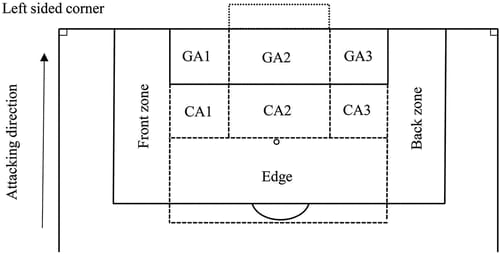
Under the Goalkeeper 8-Second Rule in Football, the referee begins counting once the goalkeeper establishes clear control. If the ball is not released within eight seconds, a corner kick is awarded to the opposition. This consequence changes the risk profile of delayed distribution.
Unlike previous enforcement structures that resulted in indirect free kicks, the corner restart creates immediate territorial pressure. This shift increases the potential reward for coordinated pressing behaviour.
Pressing systems rely on recognisable cues. The eight-second limit introduces a consistent and predictable cue. As the countdown progresses, attackers can coordinate movement to block central lanes while maintaining compact vertical spacing.
Rather than engaging prematurely, forwards may delay their sprint until distribution becomes urgent. This timing narrows options and increases the probability of rushed execution.
The final seconds of possession therefore become a controlled moment rather than reactive chaos.
Modern teams frequently initiate play through short passes to central defenders positioned near the penalty area. To exploit the Goalkeeper 8-Second Rule in Football effectively, pressing players must angle their runs to prevent direct access into central zones.
By screening the pivot and cutting passing lanes to centre-backs, attackers guide the goalkeeper toward predictable wide outlets. These channels become secondary traps rather than safe exits.
Midfielders positioned higher up the pitch can then compress space and contest the first reception.
When passing lanes are restricted and the time limit approaches, long distribution becomes more likely. However, rushed long balls often lack precision and trajectory control.
Compact midfield structures prepared for aerial duels can convert these situations into sustained attacking phases. Winning the second ball immediately restores territorial dominance.
This method does not rely on regaining possession directly from the goalkeeper. It focuses instead on destabilising the initial build-up.
The awarding of a corner kick alters the psychological balance. The defending side must consider the possibility of conceding an advanced restart simply through delayed release.
Pressing teams aware of this sanction may increase visual pressure as the countdown nears completion. Even without direct contact, the presence of attackers positioned aggressively inside the penalty area can heighten urgency.
The rule thereby creates an indirect incentive for goalkeepers to accelerate decision-making.
Effective exploitation requires structural support. If forwards advance without midfield backing, the goalkeeper may bypass pressure with a simple pass.
Maintaining short vertical distances between lines ensures that once the ball is released, secondary passing lanes remain restricted. Compact spacing prevents the first receiver from turning comfortably.
This layered approach transforms the eight-second window into collective action rather than isolated pressure.
Teams defending with advanced positioning benefit from reduced recovery distance after distribution. If the goalkeeper clears long under pressure, a high line can compress space quickly and challenge for possession.
Coordination between defensive height and pressing intensity ensures that exploiting the Goalkeeper 8-Second Rule in Football does not expose space behind the back line.
Structured positioning remains essential to balancing aggression and stability.
The visible countdown affects concentration and composure. As time decreases, the likelihood of conservative or hurried choices increases.
Goalkeepers may prioritise immediate safety over optimal build-up shape. This shift changes the rhythm of possession and reduces controlled progression.
Teams prepared to capitalise on these subtle psychological cues often gain incremental territorial advantage.
Pressing indiscriminately carries exposure. If attackers commit too early, space may appear behind the midfield line. Exploitation must therefore be measured and synchronised.
Recovery patterns should be rehearsed to cover transitions if pressure is bypassed before the countdown concludes.
Disciplined engagement ensures the strategic use of the rule does not compromise defensive balance.
The Goalkeeper 8-Second Rule in Football represents more than administrative clarification. It formalises a temporal boundary that influences pressing behaviour, defensive positioning, and tempo management.
Teams capable of structuring their pressure around predictable countdown phases can convert regulation into advantage. While the rule does not alter formations directly, it shapes micro-moments that accumulate across matches.
In competitive environments where marginal gains determine outcomes, exploiting the Goalkeeper 8-Second Rule in Football becomes a calculated extension of modern pressing strategy.