Physical Address
MICKYWORLDNG
Physical Address
MICKYWORLDNG


MICKYWORLDNG IS READER-SUPPORTED. WHEN YOU BUY THROUGH LINKS ON OUR SITE, WE MAY EARN AN AFFILIATE COMMISSION AT NO EXTRA COST TO YOU.
How to head the ball in football is a fundamental skill that every player must develop to become effective in both attacking and defensive situations. While heading may look simple, it is actually a technical action that requires correct body positioning, timing, awareness, and control. Players who master this skill gain a major advantage in aerial duels, crosses, and set-piece situations, where matches are often decided.
Understanding how to head the ball in football starts with recognizing that it is not just about making contact with the ball. It involves directing the ball with purpose, generating power through proper technique, and maintaining balance under pressure. Without these elements, headers become weak, inaccurate, or difficult to control, which limits a player’s effectiveness on the pitch.
In real game situations, heading is rarely performed in isolation. Players are often under pressure from opponents, moving at speed, or reacting to unpredictable ball trajectories. This makes it even more important to develop a strong technical foundation that allows consistent performance regardless of the situation.
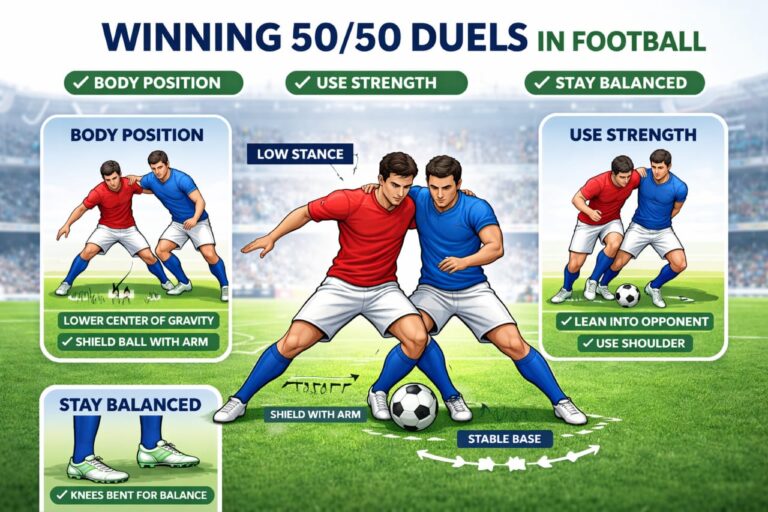
One of the most important aspects of heading technique in football is body positioning. Before making contact with the ball, players must position themselves correctly to maintain balance and control. This includes keeping a stable stance, slightly bending the knees, and aligning the body with the direction of the ball. Good positioning allows players to react quickly and adjust to different types of passes or crosses.
The contact point is another critical detail in how to head the ball in football. The ball should be struck using the center of the forehead, as this provides the best combination of accuracy and power. Using other parts of the head reduces control and increases the risk of misdirection. Keeping the eyes open and focused on the ball until the moment of contact ensures better timing and cleaner execution.
Power in heading does not come from the neck alone. Instead, it is generated through coordinated movement involving the core, upper body, and neck. Players should slightly arch their back and then drive forward into the ball, using their entire body to create force. This technique allows for stronger and more controlled headers, especially in competitive situations.
Another key element of how to head the ball in football is follow-through. After making contact, players should guide the ball toward their intended target rather than stopping their movement abruptly. This follow-through helps control direction and ensures that the header is effective, whether aiming for goal or clearing the ball.
Timing is one of the most important factors in how to head the ball in football. Even with perfect technique, poor timing can make a header ineffective. Players must learn to read the flight of the ball, anticipate its path, and position themselves correctly before jumping.
Good timing allows players to meet the ball at the highest or most advantageous point, giving them an edge over opponents. This is especially important in aerial duels, where winning the first contact often determines the outcome of the situation.
Players must also understand when to attack the ball and when to wait. Moving too early can lead to mistimed jumps, while reacting too late reduces the chance of making clean contact. Developing this awareness comes from practice and experience in real match situations.
This movement and timing are closely connected to attacking patterns explained in third man runs in football, where arriving at the right moment is more important than simply moving quickly. The same principle applies to heading, where timing determines success.
Jumping correctly is essential when learning how to head the ball in football, especially in contested situations. Players must use both legs to generate power and maintain balance while in the air. A strong and controlled jump allows players to reach higher and compete more effectively against opponents.
Using the arms is also important for balance and protection. Players should raise their arms naturally to stabilize their body and create space without committing fouls. This helps maintain control during aerial challenges and reduces the risk of losing balance.
Body control in the air is what separates average players from strong aerial players. Staying balanced allows players to adjust their position mid-air and make better contact with the ball. Without this control, headers often lack accuracy and direction.
Mastering aerial balance improves consistency in heading and allows players to perform effectively even under physical pressure from opponents.

In attacking situations, how to head the ball in football focuses on directing the ball accurately toward goal. Players must adjust their body position to guide the ball into dangerous areas, often aiming downward or toward the corners to make it difficult for goalkeepers.
Movement is key when attacking crosses. Players must position themselves between defenders, time their runs correctly, and attack the ball with confidence. Arriving late into the box often creates separation and increases the chances of making clean contact.
Headers in attack are not only about power but also about precision. A well-placed header is often more effective than a powerful but uncontrolled one. This balance between accuracy and force is what makes attacking headers dangerous.
Understanding space and positioning plays a major role here, which is closely linked to positional play in football. Players who understand space can position themselves better and create more scoring opportunities through headers.
Defensive heading is just as important as attacking heading when learning how to head the ball in football. In defensive situations, the priority is safety and control rather than precision.
Defenders must focus on clearing the ball away from dangerous areas, often aiming for height and distance. This reduces the immediate threat and gives the team time to reorganize defensively.
Positioning is crucial in defensive heading. Players must stay goal-side of their opponent, track the ball carefully, and react quickly to crosses or long balls. Good positioning increases the chances of winning aerial duels consistently.
Clear communication with teammates also plays a role, especially when multiple players are contesting the same ball. This reduces confusion and prevents defensive errors.
Learning how to head the ball in football also requires attention to safety. Proper technique reduces the risk of discomfort and ensures that players can perform consistently without injury concerns.
Keeping the neck strong and stable during contact is essential. A controlled movement absorbs impact better and improves accuracy. Players should avoid heading the ball with poor posture or unnecessary force.
Awareness is also important in crowded situations. Players must be mindful of opponents and teammates to avoid collisions during aerial challenges.
Developing safe and effective habits ensures that heading remains a reliable and controlled skill throughout a player’s development.

As players become more comfortable with heading, they begin to develop advanced techniques that allow them to adapt to different situations during a match. Not every header is the same, and understanding how to adjust technique based on the type of ball, pressure, and positioning is what separates average players from highly effective ones.
For example, when dealing with fast crosses, players must focus on redirecting the ball rather than generating power. This involves using the pace of the ball and slightly adjusting the angle of the head to guide it toward the target. In contrast, when receiving a slower or floated ball, players have more time to generate power and direct the header with greater control.
Another advanced aspect of heading technique in football is the ability to flick the ball on. This is often used in tight situations where a direct header is not possible. Instead of controlling the ball, players lightly redirect it into space for a teammate, creating new attacking opportunities.
These variations show that good heading is not just about technique, but about adjusting quickly to the type of ball, pressure, and position in real match situations.
Set-pieces are one of the most common situations where heading becomes crucial. Corners and free-kicks often lead to aerial duels, making heading ability a key factor in both scoring and defending. This is closely linked to structured attacking systems like positional play in football, where movement and timing create space for aerial chances.
In attacking set-pieces, players must focus on movement, timing, and positioning. Runs are often designed to create space and confusion among defenders, allowing attackers to arrive at the right moment to meet the ball. Timing is critical, as even a slight delay can result in missing the opportunity.
In defensive set-pieces, the priority is to clear the ball effectively and maintain organization. Players must stay focused, track their opponents, and react quickly to second balls after the initial clearance.
In open play, heading is often used to control long passes, switch play, or maintain possession. Players must decide quickly whether to control the ball, pass it on, or clear it, depending on the situation.
A key part of how to head the ball in football is decision-making. Players must constantly assess whether to challenge for the ball, hold their position, or allow a teammate to take control. Poor decisions in aerial situations can lead to loss of possession or defensive vulnerability.
Good players recognize when they have the advantage in a duel and commit fully, while also knowing when to avoid unnecessary risks. This awareness reduces mistakes and improves overall team performance.
Decision-making also involves understanding the context of the game. For example, clearing the ball may be the best option in a defensive situation, while controlling it might be more effective when building an attack.
This ability to make the right choice under pressure is what makes heading a complete skill rather than just a physical action.
Improving how to head the ball in football requires consistent and focused training. Players must practice both technique and timing in realistic scenarios to develop confidence and accuracy.
One effective drill is repeated crossing and finishing, where players attack balls delivered from wide areas. This helps improve timing, positioning, and coordination during attacking headers.
Another useful exercise is aerial duel training, where players compete for the ball under controlled conditions. This develops physical strength, balance, and confidence when challenging opponents.
Players can also practice heading accuracy by aiming at specific targets, which improves control and precision. Combining these drills creates a well-rounded approach to developing heading ability.
Even when players understand how to head the ball in football, mistakes can still occur if certain details are ignored. One common mistake is closing the eyes before contact, which reduces accuracy and control.
Poor body positioning is another issue. Without proper balance, players struggle to generate power or direct the ball effectively. This often leads to weak or misdirected headers.
Timing errors are also frequent, especially among beginners. Jumping too early or too late makes it difficult to connect cleanly with the ball, reducing the effectiveness of the header.
By identifying and correcting these mistakes, players can significantly improve their consistency and confidence in aerial situations.
Confidence plays a major role in mastering how to head the ball in football. Players who hesitate often lose aerial duels, while those who commit fully are more likely to succeed.
This confidence comes from repetition and familiarity with the technique. The more players practice heading in different situations, the more comfortable they become during matches.
Confidence also improves decision-making, allowing players to react quickly and effectively. This is especially important in high-pressure situations where hesitation can lead to missed opportunities.
Over time, consistent training and match experience build the confidence needed to perform reliably in aerial challenges.
Mastering how to head the ball in football requires a combination of technique, timing, awareness, and confidence. It is a skill that influences both attacking and defensive performance, making it essential for players at all levels.
By focusing on proper body positioning, accurate contact, and intelligent movement, players can improve their effectiveness in aerial situations. These fundamentals, combined with consistent training, lead to long-term development.
Heading is not just about winning the ball—it is about controlling it, directing it, and using it to influence the game. Players who understand this become more complete and effective on the pitch.
With the right approach, how to head the ball in football becomes a reliable and powerful skill that enhances overall performance.