Physical Address
MICKYWORLDNG
Physical Address
MICKYWORLDNG

MICKYWORLDNG IS READER-SUPPORTED. WHEN YOU BUY THROUGH LINKS ON OUR SITE, WE MAY EARN AN AFFILIATE COMMISSION AT NO EXTRA COST TO YOU.
Third man runs in football are one of the most effective tactical tools used by modern teams to break defensive lines and create space. Rather than relying on direct passes, this concept introduces a third player into the sequence, allowing teams to bypass pressure and exploit gaps that defenders struggle to track.
At its core, the idea is simple but powerful. A player passes the ball to a teammate, and instead of holding possession, that teammate quickly lays it off to a third player making a forward run. This movement often happens outside the defender’s field of vision, making it extremely difficult to defend.
This is why third man runs are widely used in systems based on positional play in football, where structure, spacing, and movement combine to create consistent advantages.
A third man run is a coordinated attacking movement involving three players. The third player, who is not directly involved in the initial pass, makes a well-timed run to receive the ball in space.
This concept allows teams to move the ball forward quickly while avoiding direct pressure from defenders. Instead of predictable passing, the ball travels through a sequence that disrupts defensive positioning.
It is especially effective because defenders tend to focus on the ball and the immediate receiver, leaving space behind them for the third player to exploit.
The structure of third man runs is built around three key roles:
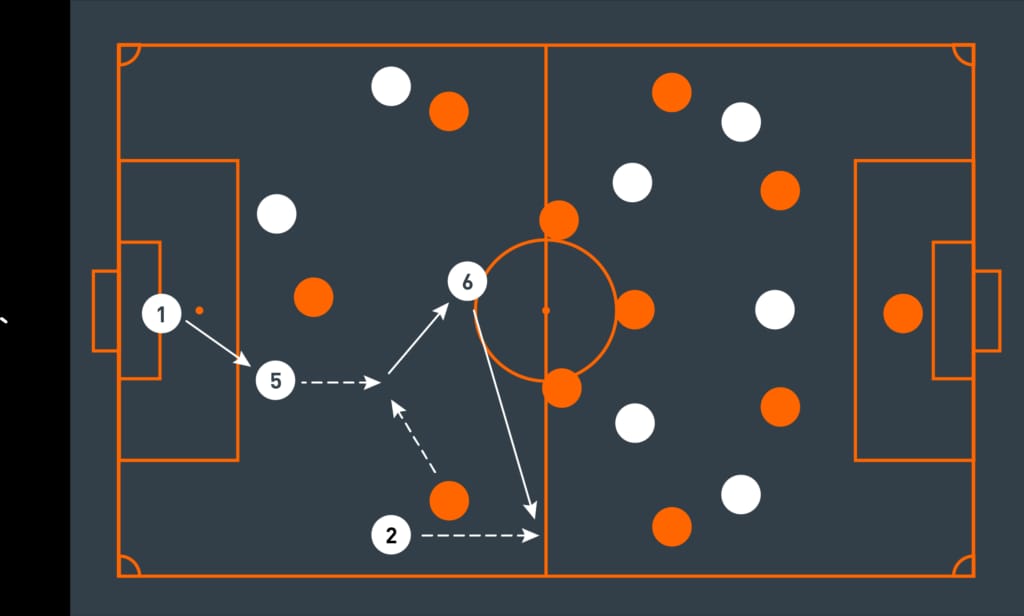
Player A (The Initiator): Starts the move by playing a forward or lateral pass into a teammate.
Player B (The Link Player): Receives the ball and quickly lays it off, often in one touch, without turning.
Player C (The Third Man): Makes a timed run into space to receive the ball beyond the defensive line.
This sequence allows teams to progress the ball quickly while maintaining tempo and avoiding defensive pressure.
Teams like Manchester City use this pattern consistently, with midfielders and forwards combining quickly to release runners beyond defensive lines.
The key to success lies in timing and positioning. If the run is too early, the player may be marked. If it is too late, the opportunity disappears. This is why elite teams train these movements repeatedly to achieve precision.
Third man runs are difficult to defend because they exploit natural defensive reactions. When a pass is played, defenders instinctively move toward the ball and the immediate receiver. This creates blind-side spaces that the third player can attack.
In many cases, this movement allows teams to bypass entire lines of pressure, especially against aggressive pressing systems. This is closely linked to concepts like pressing triggers in football, where teams commit forward to win the ball but leave space behind.
By using a third man run, attacking teams can turn defensive pressure into an advantage.
There are several structured patterns teams use to execute third man combinations effectively.
Up-Back-Through: A forward pass is played into a striker (Up), who lays it off to a midfielder (Back), who then plays a through ball to a runner (Through). This is one of the most widely used patterns in modern football.
Inverted Triangle: The ball is played into a player positioned behind the pressing line, who then finds a third runner attacking the space left by the defender.
Bounce Pass: A quick one-touch exchange between two players creates space for a third player to run into the channel.

These patterns are not random. They are carefully designed to manipulate defensive positioning and create openings in structured defensive systems.
One of the main purposes of third man runs is to break defensive lines. Instead of attempting risky direct passes, teams use combination play to move the ball through compact structures.
This is particularly effective against teams that defend in a low block or high defensive line, where space is limited and passing options are restricted.

By introducing a third player into the sequence, teams create an additional layer of movement that defenders must track. This often leads to confusion, delayed reactions, and eventually space opening up.
When executed correctly, third man runs allow teams to progress the ball quickly into dangerous areas while maintaining control and structure.
Timing is everything in third man runs. The success of the movement depends on the coordination between all three players involved.
The third player must read the situation and begin their run at the exact moment the second player receives the ball. This ensures they arrive in space just as the pass is played.
Movement off the ball is equally important. Players must constantly adjust their positioning to create angles, passing lanes, and space for the third man to attack.
This level of coordination is what separates average teams from elite ones.
Third man runs are a fundamental part of modern football tactics. They are heavily used by teams that focus on structured attacking play, particularly those employing high positional discipline.
In systems that use a high defensive line in football, these runs become even more dangerous, as they allow attackers to exploit space behind defenders quickly.
They also connect closely with transition-based systems such as gegenpressing in football, where winning the ball back quickly creates immediate opportunities for third man combinations.
Understanding this concept provides deeper insight into how modern teams create chances and control matches at the highest level.
Third man runs in football are widely used by elite teams because they provide a reliable way to progress the ball through organised defensive structures. Managers who focus on positional discipline and structured attacking patterns often build their systems around this concept.
One of the most well-known examples comes from Pep Guardiola’s teams. At Barcelona and Manchester City, third man combinations are used constantly in central areas. Midfielders position themselves between the lines, receive under pressure, and quickly release a runner moving beyond the defensive line.
This approach is closely linked to structured systems like rest defence in football, where attacking shape is balanced to maintain control even if possession is lost.
Roberto De Zerbi’s teams also rely heavily on third man runs, particularly during build-up. By attracting pressure onto the ball, they create space for a third player to receive in a more advanced position. This controlled risk-taking allows them to break pressing structures effectively.
In both cases, the principle remains the same: draw defenders toward the ball, then exploit the space they leave behind.
In modern football, third man runs have evolved beyond simple passing patterns. Teams now use them as part of a larger tactical framework designed to manipulate opposition structures.
Provoking the Press: Teams intentionally invite pressure by holding the ball in deeper areas. Once the opponent commits, the ball is quickly played through a third man combination to bypass the press entirely.
Goalkeeper Involvement: Goalkeepers are increasingly used as the starting point of third man sequences. Acting as Player A, they initiate the move by finding a midfielder who then links play to a forward runner.
Dynamic Rotations: Players constantly rotate positions to confuse defensive marking. This creates uncertainty about who should track the third man, often leading to defensive breakdowns.
These developments show how third man runs are no longer isolated actions but part of a wider tactical identity.
While the structure of third man runs remains consistent, the triggers that initiate these movements are equally important.
Back-Foot Reception: When a player receives the ball on their back foot and opens their body, it signals that a forward pass is possible. This often triggers the third man to begin their run.
Pressure on the Ball Carrier: When the ball carrier is pressed aggressively, teammates anticipate a quick layoff and prepare to attack space immediately.
Body Orientation: The positioning of the receiving player determines whether the play will move forward, sideways, or backward. Recognising these cues allows teammates to react quickly.
These small details are what make third man runs effective at the highest level.
Third man runs offer several tactical advantages that make them essential in modern football.
Breaking Defensive Lines: By using combination play, teams can bypass multiple defenders without relying on risky direct passes.
Exploiting Blind Spots: The third player often moves outside the defender’s field of vision, making it difficult to track their run.
Creating Numerical Superiority: These movements can turn balanced situations into overloads, giving the attacking team a clear advantage.
Maintaining Tempo: Quick one-touch passing keeps the ball moving and prevents the defence from resetting.
This is why third man runs are frequently seen in teams that dominate possession and control matches.
Despite their effectiveness, third man runs also carry certain risks.
Timing Errors: If the run is mistimed, the move breaks down and possession is lost.
Over-Commitment: Sending too many players forward can leave the team exposed if the move fails.
Predictability: If overused without variation, opponents may anticipate the pattern and intercept passes.
These risks highlight the importance of balance, especially in relation to defensive structure and transition control.
Coaches often design training drills specifically to develop third man combinations. These drills focus on timing, positioning, and decision-making under pressure.
Players are taught to recognise triggers, move in coordination, and execute passes quickly. Repetition is key, as these movements must become automatic during matches.
Small-sided games are particularly effective for training this concept, as they replicate the tight spaces and quick decisions required in real matches.
Third man runs have become a fundamental part of modern football because they offer a structured way to break down organised defences. As teams become more compact and tactically disciplined, simple passing is no longer enough.
Instead, success depends on coordinated movement, intelligent positioning, and quick decision-making. Third man runs combine all of these elements into a single, effective concept.
They also connect seamlessly with other tactical ideas, from positional play to pressing systems, making them a key component of modern football strategy.
Third man runs in football represent one of the most effective ways to break defensive lines and create attacking opportunities. By involving a third player in the passing sequence, teams can bypass pressure, exploit space, and maintain control of the game.
As football continues to evolve, this concept remains central to how top teams attack. Whether used in build-up play, transitions, or final-third combinations, third man runs provide a consistent and reliable method of progressing the ball.
Understanding this tactical idea offers deeper insight into the patterns and movements that define modern football at the highest level.