Physical Address
MICKYWORLDNG
Physical Address
MICKYWORLDNG

MICKYWORLDNG IS READER-SUPPORTED. WHEN YOU BUY THROUGH LINKS ON OUR SITE, WE MAY EARN AN AFFILIATE COMMISSION AT NO EXTRA COST TO YOU.
Positional Play in Football is a tactical philosophy that focuses on controlling space through structured positioning, intelligent movement, and coordinated team organisation. Rather than simply keeping possession, teams use the ball as a tool to manipulate the opponent’s shape, create advantages, and open passing lanes in key areas of the pitch.
This approach divides the pitch into specific zones, allowing players to maintain optimal spacing and create consistent passing options. Every player has a defined role within the structure, ensuring that the team remains balanced both in attack and during transitions.
Modern football has increasingly shifted toward structured systems like positional play because they offer greater control over matches. Teams that master this approach can dominate possession, dictate tempo, and reduce defensive risks.
Positional play is not just about passing the ball. It is about positioning players in a way that creates constant advantages across the pitch.
The idea is simple: control space, and you control the game. By occupying specific zones, teams force opponents into difficult decisions, stretching their defensive shape and creating gaps that can be exploited.
This is why positional play is often misunderstood as “possession football.” While possession is important, the real objective is to create situations where the team has a clear advantage.
These advantages are commonly referred to as:
Numerical superiority: Having more players in a specific area than the opponent.
Positional superiority: Placing players in spaces where they can receive the ball freely.
Qualitative superiority: Isolating stronger players against weaker opponents.
These concepts form the foundation of positional play and influence how teams structure themselves on the pitch.
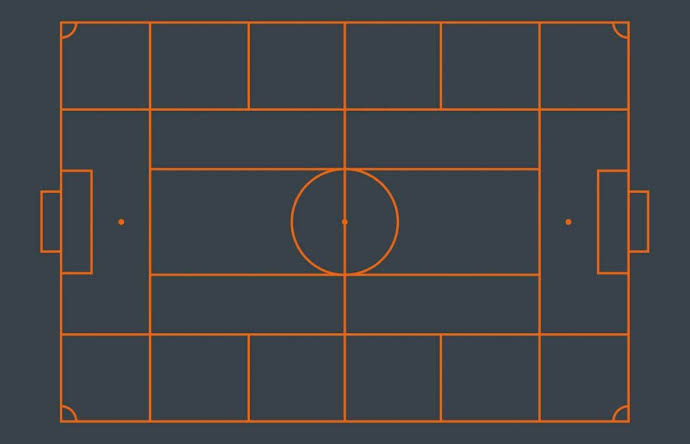
One of the defining features of positional play in football is how the pitch is divided into zones.
The field is typically split into five vertical lanes:
– Left wing
– Left half-space
– Central zone
– Right half-space
– Right wing
This structure ensures that the team maintains width and balance at all times.
In addition, the pitch is often divided horizontally into thirds, allowing teams to organise their build-up, progression, and final-third play more effectively.
This zoning system helps players understand where they should be positioned and how they should move relative to the ball and their teammates.
Teams like Manchester City under Pep Guardiola apply this structure consistently, using defined zones to maintain spacing and create passing options across the pitch.
Spacing is the foundation of positional play. Without proper spacing, even the best tactical system becomes ineffective.
Players must maintain specific distances from each other to ensure that passing options are always available.
A key rule often applied is limiting the number of players in the same zone. Overloading one area can make the team predictable and easier to defend.
Instead, players are spread across different zones to stretch the opposition and create gaps.
This concept is closely connected to midfield compactness in football, where spacing and distance between players determine how effectively a team can control the game.
One of the most important elements of positional play is the creation of passing structures such as triangles and diamonds.

These shapes ensure that the player on the ball always has multiple passing options.
By positioning themselves at different angles and distances, players create a network that makes it difficult for opponents to apply effective pressure.
This structure allows teams to progress the ball smoothly while maintaining control.
It also reduces the risk of losing possession, as players are never isolated.
Width and depth are essential components of positional play in football.
Width: Wingers or wide players stay close to the touchline, stretching the opponent’s defensive shape horizontally.
Depth: Forwards and attacking midfielders make vertical movements, creating space between defensive lines.
This combination creates gaps that can be exploited by players operating in central areas.
Without width and depth, the opposition can remain compact, making it difficult to break down their structure.
The half-spaces are one of the most important areas in positional play.

These are the channels between the wide areas and the central zone. They provide ideal positions for creative players to receive the ball and influence the game.
Players operating in these zones can:
– Receive the ball between defensive lines
– Turn and face goal
– Create scoring opportunities
Because these areas are difficult to defend, they are heavily used in modern tactical systems.
While positional play relies on structure, it is not rigid. Players are allowed to move and rotate positions, but these movements must be coordinated.
If one player leaves a zone, another must fill it. This ensures that the overall structure of the team remains intact.
These rotations make the system more dynamic and harder to defend.
However, they also require high levels of understanding and communication between players.
Positional play is closely linked to rest defence in football.
While positional play focuses on attacking structure, rest defence ensures that the team remains protected when possession is lost.
Because players are already positioned in a structured way, teams can transition quickly into defensive actions.
This reduces the risk of counter-attacks and maintains overall balance.
Another key connection is with gegenpressing in football.
When teams lose possession, their structured positioning allows them to apply immediate pressure.
Players are already close to each other, making it easier to surround the ball and attempt to win it back quickly.
This combination of positional play and counter-pressing is a defining feature of modern football.
Positional play in football provides several key advantages that make it one of the most effective tactical systems in the modern game.
Control of the Game: By maintaining structured positioning, teams can dominate possession and dictate the tempo. Players always have passing options, reducing the likelihood of losing the ball under pressure.
Creation of Passing Lanes: The spacing between players ensures that passing lanes are constantly available. This makes it easier to progress the ball through different areas of the pitch.
Breaking Defensive Structures: By stretching the opposition both horizontally and vertically, positional play creates gaps that can be exploited. Defenders are forced to make decisions, often leading to disorganisation.
Better Transition Control: Because players are already positioned in a structured way, teams can react quickly when possession is lost. This links directly with concepts like rest defence in football, ensuring defensive stability.
Improved Counter-Pressing: Players remain close enough to apply immediate pressure after losing possession. This allows teams to win the ball back quickly and sustain attacking pressure.
Despite its strengths, positional play in football also comes with significant risks.
Vulnerability to Counter-Attacks: The structured attacking shape can leave space behind the defence. If possession is lost in central areas, opponents can exploit these gaps quickly.
High Technical Demand: Players must be comfortable receiving the ball under pressure and making quick decisions. A single mistake can disrupt the entire structure.
Predictability: If the system becomes too rigid, opponents can anticipate movements and block passing lanes.
Dependence on Coordination: The success of positional play relies heavily on teamwork. If one player fails to maintain their position, the structure can collapse.
These risks highlight the importance of balance. Teams must combine structure with flexibility to remain effective.
Each position has a specific role within a positional play system. Understanding these roles is key to executing the system effectively.
Centre-Backs: They are responsible for building play from the back. Their positioning helps create numerical superiority in the first phase of build-up.
Fullbacks: Depending on the system, fullbacks may stay wide or move into central areas. Inverted fullbacks often help create overloads in midfield.
Midfielders: They control the tempo of the game. Positioned between the lines, they receive the ball and link different phases of play.
Wingers: They provide width by staying close to the touchline. This stretches the defence and creates space in central areas.
Striker: The striker provides depth by making forward runs. They also help pin defenders and create space for midfielders.
Each role is interconnected. The effectiveness of the system depends on how well players understand and execute their responsibilities.
Build-up play is a critical phase in positional play. Teams use structured positioning to progress the ball from defence to attack.
One common approach is creating a numerical advantage in the first phase. This allows teams to bypass the opponent’s press and maintain control.
Midfielders often drop deeper to support the build-up, while fullbacks adjust their positioning to create additional passing options.
This structured approach ensures that the team can progress the ball safely and efficiently.
One of the main objectives of positional play is to break defensive lines.
This is achieved through:
Vertical passes: Passing through the lines to players positioned between defenders.
Third-man combinations: Using a third player to bypass pressure and create space.
Quick rotations: Moving players between zones to disrupt defensive structure.
These methods allow teams to progress the ball into dangerous areas and create scoring opportunities.
Discipline is essential in positional play. Players must maintain their positions and follow tactical instructions to ensure the system works effectively.
This discipline allows the team to maintain structure, control space, and react quickly to changes in possession.
However, it does not eliminate creativity. Instead, it provides a framework within which players can express themselves.
Several managers have successfully implemented positional play in football.
Pep Guardiola: Known for his structured approach, Guardiola has used positional play to dominate possession and control matches at Barcelona, Bayern Munich, and Manchester City.
Johan Cruyff: One of the pioneers of positional play, Cruyff developed many of the concepts that are still used today.
Mikel Arteta: Arteta has adapted positional play principles to create a modern, flexible system at Arsenal.
These examples demonstrate how positional play can be applied at the highest level.
Teams often struggle with positional play due to common mistakes.
Poor spacing: Players are too close or too far apart, reducing effectiveness.
Lack of movement: Static positioning makes it easier for opponents to defend.
Slow decision-making: Delays allow defenders to recover their shape.
Failure to rotate: Without rotations, the system becomes predictable.
Addressing these issues is essential for improving performance.
Positional play does not exist in isolation. It is closely connected to other tactical concepts.
It works alongside high defensive line in football, which helps maintain compactness and control space.
It also links with sweeper keeper in football, where the goalkeeper supports build-up play and defensive structure.
These connections show how modern football systems are built on multiple interrelated concepts.
Positional play in football has become a defining feature of modern tactical systems because it provides control, structure, and flexibility.
Teams that master this approach can dominate matches, create consistent chances, and reduce defensive vulnerabilities.
As football continues to evolve, positional play remains at the centre of tactical development.
Positional Play in Football is more than just a tactical system. It is a philosophy that focuses on controlling space, creating advantages, and maintaining balance throughout the game.
By understanding its principles, structures, and applications, teams can improve both their attacking and defensive performance.
When executed correctly, positional play allows teams to control matches, break down opponents, and maintain stability in all phases of play.