Physical Address
MICKYWORLDNG
Physical Address
MICKYWORLDNG

MICKYWORLDNG IS READER-SUPPORTED. WHEN YOU BUY THROUGH LINKS ON OUR SITE, WE MAY EARN AN AFFILIATE COMMISSION AT NO EXTRA COST TO YOU.
Midfield compactness in football is central to how elite teams control matches without constant tackling. By reducing the vertical and horizontal gaps between defensive, midfield, and attacking units, teams limit the space opponents can exploit between the lines. This structure supports pressing, stabilises defensive height, and protects central zones.
Modern football increasingly revolves around spatial control. Rather than chasing the ball endlessly, dominant sides focus on compressing the pitch. Midfield compactness provides the platform that allows high defensive lines, coordinated pressing, and structured transitions to function effectively.
Midfield compactness refers to the disciplined positioning of midfielders within short distances of both the defensive line behind them and the forward line ahead. The objective is to deny space between units, particularly in central areas where creative players operate.
When compactness is maintained, passing lanes narrow and forward progression becomes predictable. Opponents are often forced wide or backwards.
Without compact spacing, gaps open between midfield and defence, inviting runs and through balls into dangerous pockets.

The most important element of midfield compactness in football is vertical distance. The gap between defenders and midfielders must remain small enough to prevent attackers from receiving freely between the lines.
Teams that operate with a High Defensive Line in Football rely heavily on midfield support. When defenders step forward, midfielders must advance simultaneously to maintain compression.
If midfielders hesitate, opponents exploit the space immediately behind the press.
Compactness is not only vertical. Horizontal discipline ensures central zones remain crowded. Midfielders shift laterally as a unit, mirroring ball movement.
This collective sliding prevents diagonal passing lanes from opening. Wide areas may be temporarily conceded, but central penetration is restricted.
Elite teams prioritise central density because most dangerous combinations develop between the lines rather than near the touchline.
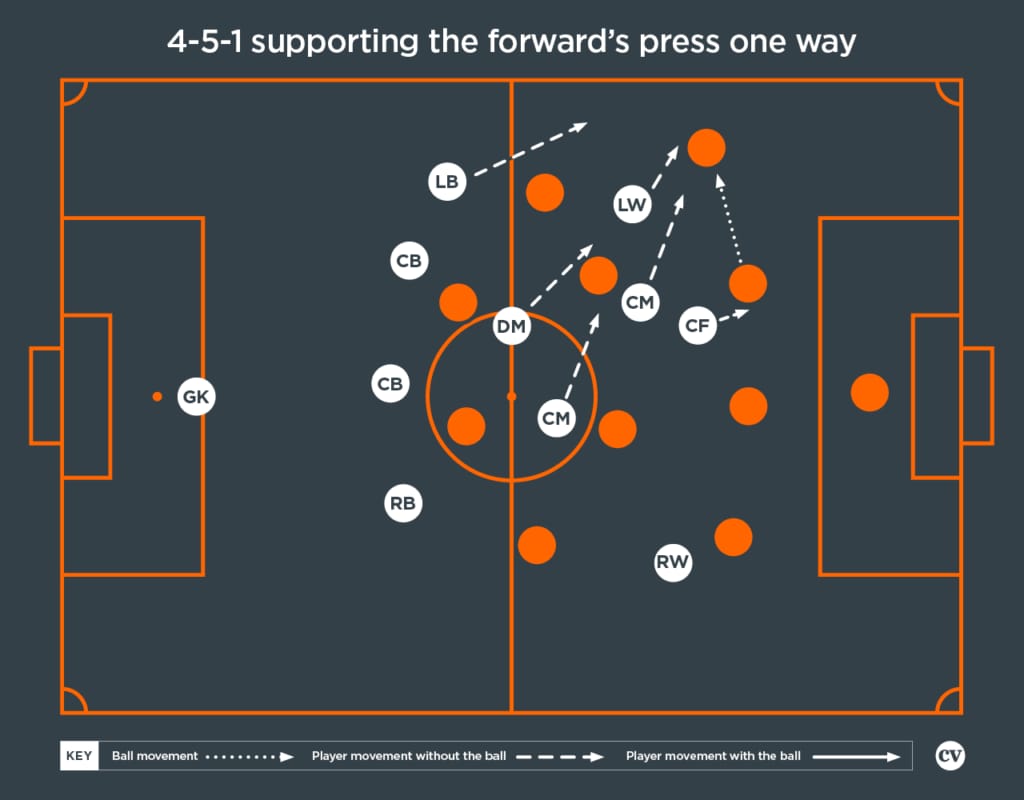
Pressing systems depend on midfield proximity. When forward players initiate pressure, midfielders must step up immediately to close secondary passing lanes.
For deeper insight into those coordinated cues, see Pressing Triggers in Football.
Compactness ensures that once the ball is forced backward or sideways, options remain limited. The press becomes sustainable rather than isolated.
A well-timed offside trap requires tight spacing in front of the defensive line. If midfield gaps are excessive, opponents can release passes early and disrupt alignment.
Our analysis of the Offside Trap in Football highlights how defensive stepping depends on pressure from midfield.
Compact spacing makes through balls more difficult to execute accurately.
Midfield compactness is equally important in deeper defensive structures. When operating in a contained shape, short distances between lines protect the penalty area.
A detailed comparison of defensive heights is available in Low Block vs High Defensive Line in Football.
Regardless of defensive height, compactness remains fundamental to denying central access.
When possession is lost, compact teams react more quickly. Shorter distances allow faster closing down of the ball carrier.
Because players are already positioned close together, defensive recovery does not require long sprints across the pitch.
This structural efficiency reduces vulnerability during transitions.

The holding midfielder acts as the anchor of compact shape. Positioned between defence and attack, this player adjusts depth according to pressing intensity.
When the back line advances, the holding midfielder shifts upward. When defenders drop, the midfielder screens passing lanes.
This constant adjustment preserves structural balance.
Goalkeeper behaviour also adapts to midfield spacing. Teams using a Sweeper-Keeper in Football rely on collective compression to minimise space behind the defence.
When the midfield remains close to the defensive line, the goalkeeper can hold a higher starting position with confidence.
Every unit supports the next, maintaining structural harmony.
Compact teams limit opponents’ time on the ball. Attackers must make quicker decisions within crowded areas.
Repeated exposure to reduced space often leads to forced passes or speculative attempts.
Over extended periods, this compression shapes the tempo of the match.
Midfield compactness in football underpins territorial dominance. It allows teams to compress the pitch, support high defensive lines, and execute pressing triggers with coordination.
Without tight spacing, advanced defensive positioning becomes fragile. With compact structure, teams control both depth and central corridors.
Across evolving tactical systems, compactness remains consistent: controlling space between the lines determines how effectively a team governs the match.
Tags: Midfield Compactness in Football, Football Tactics, High Defensive Line in Football