Physical Address
MICKYWORLDNG
Physical Address
MICKYWORLDNG

MICKYWORLDNG IS READER-SUPPORTED. WHEN YOU BUY THROUGH LINKS ON OUR SITE, WE MAY EARN AN AFFILIATE COMMISSION AT NO EXTRA COST TO YOU.
The High Defensive Line in Football has become one of the clearest indicators of how top sides aim to control a match. Instead of retreating toward their own penalty area, leading teams push their back line closer to halfway, compressing space and keeping play away from their goal. The objective is control — of territory, tempo, and defensive transitions.
Across different leagues and tactical eras, dominant sides have shared this principle. The formations may change and player roles may evolve, but the underlying idea remains the same: defend higher to shorten the pitch, recover possession earlier, and sustain pressure.
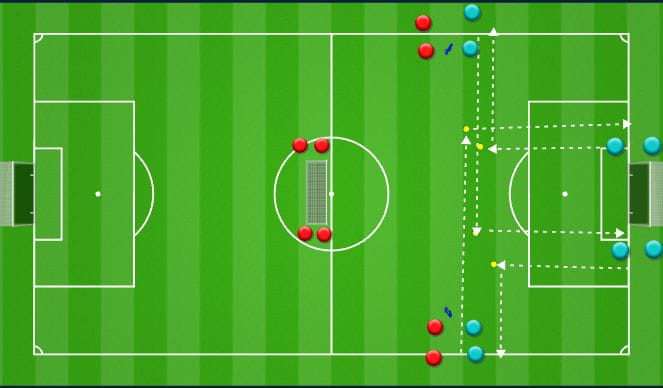
Viewed in context, the high line is not a standalone defensive choice. It shapes pressing intensity, midfield spacing, recovery runs, and even the goalkeeper’s starting position. That coordination is often what separates proactive teams from those that defend reactively.
A High Defensive Line in Football describes a back line positioned well outside its penalty area when out of possession. Rather than dropping deep by default, defenders step forward to reduce the space between themselves and the midfield unit.
The height of the line depends on pressure. If the ball carrier is under immediate stress, the defense can move up aggressively. If the opponent has time to look forward, the line adjusts. Coordination, not recklessness, defines successful implementation.
Space behind the defense only becomes dangerous when the ball carrier has time. Once pressure is applied, long passes lose accuracy and attacking runs are easier to track.
Pushing the defensive line forward shifts the match toward the opponent’s half. Manchester City under Pep Guardiola provide a consistent example. Their central defenders often operate near midfield during controlled possession, prepared to close down clearances and immediately regain territory.
To understand how defensive height compares with deeper structures, see our breakdown of the Low Block vs High Defensive Line in Football.This territorial presence reduces prolonged defending near goal. Instead of absorbing waves of attacks, possession is recycled in advanced areas where counter-pressing becomes immediate.
Arsenal’s tactical evolution under Mikel Arteta has followed a similar path. By holding a high line and narrowing the space between units, they compress the pitch and reduce the opponent’s ability to build centrally.
Defensive height influences where duels occur and how often opponents can progress through midfield. When the line is advanced and compact, forward passes become more difficult to execute cleanly.
Pressing and defensive positioning are inseparable. Liverpool during their most coordinated pressing phase demonstrated how the front line, midfield, and defense moved almost as a single unit. The forwards closed angles, midfielders stepped forward, and the defensive line squeezed the pitch behind them.
Distances between units stayed tight. That made second balls easier to win and loose passes easier to intercept.

If pressing lacks support from the back line, space opens behind the midfield. If the line rises without pressure ahead of it, direct balls become dangerous. The success of a High Defensive Line in Football depends on this timing.
When done correctly, opponents are forced into quicker decisions and lower-percentage passes.
Leaving room behind the defense is unavoidable when playing high. Opponents will look to exploit it with long passes or well-timed runs.
Bayern Munich have often relied on central defenders comfortable defending wide channels and large spaces. Recovery speed matters, but anticipation usually proves more decisive. Reading the passer’s body shape and stepping at the right moment can prevent danger before it develops.
The trade-off is clear. Defending high means occasionally running toward your own goal. Defending deep means inviting sustained possession close to it. Many dominant teams prefer to deal with space in open field rather than repeated deliveries into the box.
Modern centre-backs in leading teams are chosen for qualities beyond traditional defending. They must operate confidently in open grass, stay composed under pressure, and contribute to the first phase of build-up.
Manchester City’s defenders frequently step into midfield to support circulation. That comfort on the ball stabilises possession and prevents unnecessary clearances, which in turn protects the defensive line from chaotic transitions.
Communication is constant. A mistimed step can dismantle an offside trap, so coordination is drilled repeatedly in training.
In high-line systems, the goalkeeper acts as an additional defender. Rather than remaining fixed on the goal line, the goalkeeper positions outside the box when the team is established in attack.

This positioning allows through balls to be intercepted early. It reduces the effective depth of the space opponents aim to exploit.
Manuel Neuer’s long-standing role at Bayern Munich showed how influential this approach can be. By stepping forward and reading long passes quickly, he became a protective layer behind the defense.
That responsibility demands composure, timing, and trust between goalkeeper and back line.
Behind every successful high line sits disciplined midfield support. When full-backs push on, central midfielders adjust their positions. When a centre-back steps into midfield, another player fills the vacated channel.
Arsenal’s use of a holding midfielder screening central spaces highlights how important that layer is. Without it, transitions become direct and difficult to control.
Repetition and awareness underpin these adjustments. The defensive line depends on players recognising pressing triggers and reacting collectively rather than individually.
The High Defensive Line in Football is often discussed in defensive terms, yet its attacking implications are equally significant.
Holding advanced defensive positions keeps the team compact during possession. When the ball is lost, the nearest players are already close enough to apply pressure. Regaining the ball quickly sustains attacking momentum.
Liverpool’s territorial dominance during their strongest phase was built on repeated recoveries in advanced areas. The distance between their defensive and attacking players allowed them to win second balls and maintain waves of pressure.
Compactness creates continuity. Rather than resetting shape deep, the team stays engaged near the opponent’s goal.
A deep defensive block can provide short-term security. However, it often hands over initiative.
When positioned close to their own goal, teams must absorb crosses, shots from distance, and sustained circulation. Transition opportunities may exist, but territorial control rarely does.
For sides aiming to dominate possession and dictate tempo, a high line offers greater influence over the rhythm of the match.
Clubs committed to a high defensive structure recruit players capable of functioning within tight spatial frameworks. Quick centre-backs, mobile midfielders, and forwards willing to press are essential components.
Squad building reflects this intention. Players are selected not only for individual ability but for how well they sustain compactness and pressure. When recruitment aligns with defensive philosophy, consistency follows.
The pace of modern football demands quick defensive reactions and intelligent positioning. Build-up patterns are more structured, and forwards are faster and more direct.
In this environment, passivity can be costly. Holding a high defensive line allows teams to contest space earlier and avoid extended spells under pressure. With improved athleticism and tactical awareness across squads, advanced positioning has become a practical response rather than an unnecessary gamble.
The High Defensive Line in Football continues to define elite teams because it links defensive security with attacking ambition. By compressing the pitch and reducing the distance between units, teams position themselves closer to regaining possession and further from immediate danger.
There are moments when retreat is necessary, and no system removes vulnerability entirely. Even so, the broader pattern remains clear: sides that seek sustained control, territorial dominance, and coordinated pressing tend to defend higher up the pitch — and over time, that territorial advantage shapes how often they control the game.
Tags: High Defensive Line in Football, Football Tactics, Elite Teams