Physical Address
MICKYWORLDNG
Physical Address
MICKYWORLDNG

MICKYWORLDNG IS READER-SUPPORTED. WHEN YOU BUY THROUGH LINKS ON OUR SITE, WE MAY EARN AN AFFILIATE COMMISSION AT NO EXTRA COST TO YOU.
1v1 situations in football are among the most decisive moments in modern attacking play. While team structure controls the game, individual duels often decide it. When an attacker isolates a defender in space, the outcome of that single action can lead directly to a chance or a goal.
At the highest level, many attacking sequences are designed specifically to create these moments, because a single successful 1v1 can completely break a defensive structure.
In modern football, these situations are no longer based purely on speed or flair. The best attackers rely on timing, positioning, and control. They do not rush into the duel. Instead, they manipulate the defender, create hesitation, and then attack the space at the right moment.
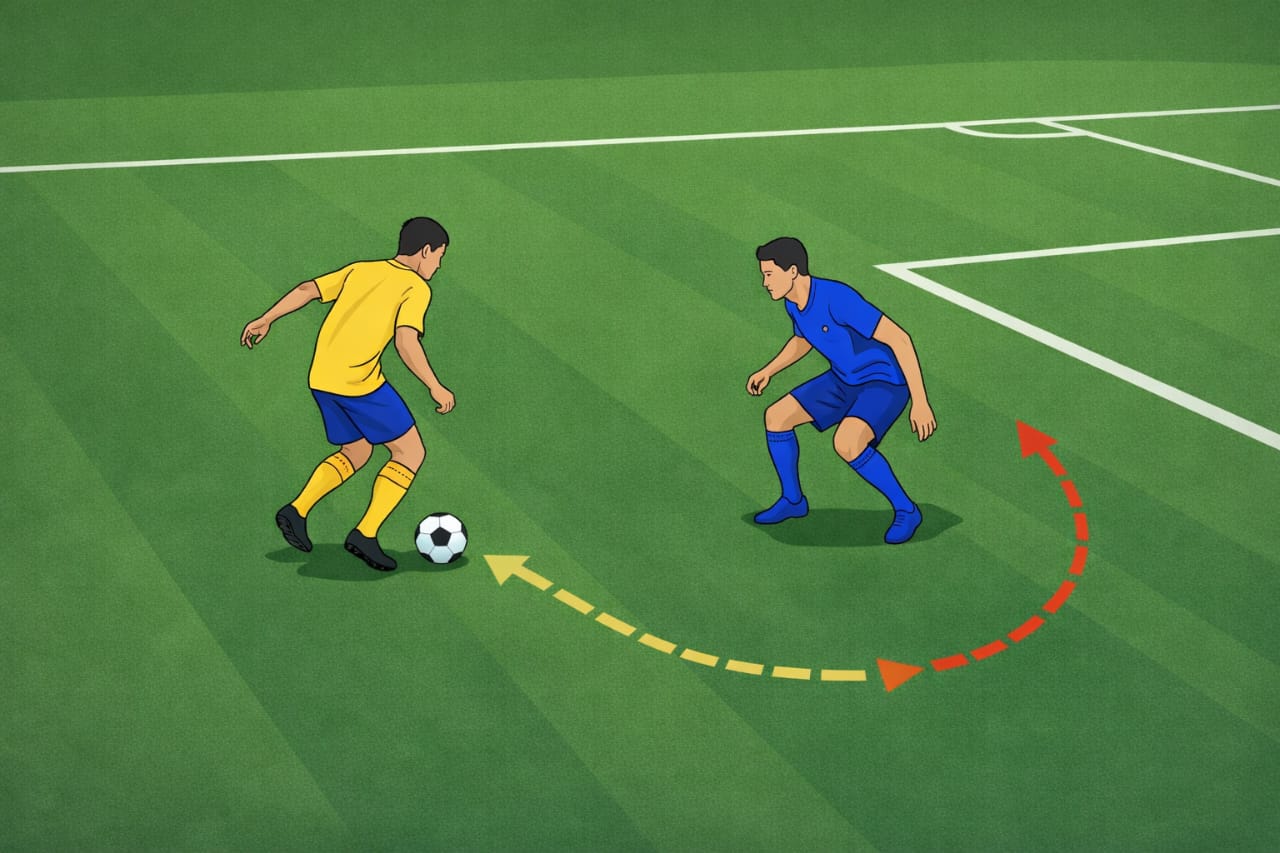
1v1 situations occur when an attacker directly faces a defender with enough space and time to attempt a take-on. These moments are most effective when the defender does not have immediate support, meaning the duel becomes a direct contest between two players.
These situations commonly appear in wide areas, especially when wingers receive the ball near the touchline, but they can also occur centrally when players receive between defensive lines.
However, these situations are rarely accidental. Top teams build their entire attacking structure around creating them. By controlling spacing and positioning, they force defenders into isolated scenarios where they are exposed.
This approach is closely connected to positional play in football, where teams use structure to create advantages across the pitch. The goal is always the same — create space, isolate a defender, and exploit the moment.
Modern defensive systems are compact and organized. Breaking them down through passing alone is difficult. This is why individual actions have become more valuable.
A successful 1v1 can disrupt the entire defensive structure. When a defender is beaten, other defenders are forced to react, creating gaps in the shape. These gaps can then be exploited through passes, runs, or direct shots.
This is particularly important in the final third, where space is limited. In many cases, the only way to create a clear opportunity is by beating a defender directly.
Teams that consistently win 1v1 duels are often more dangerous in attack because they can create chances without relying on perfect build-up play.
1v1 situations are not left to chance. They are created through deliberate tactical patterns designed to isolate defenders.
One of the most common methods is using overloads. A team may commit multiple players to one side of the pitch, forcing the opposition to shift across. Once the defensive block is pulled out of shape, the ball is quickly switched to the opposite side where a winger is left in space against a single defender.
This pattern is closely related to third man runs in football, where off-ball movement helps create passing angles and free players in dangerous areas.
Another key method is maintaining width and depth. By stretching the pitch horizontally and vertically, teams increase the distance between defenders. This makes it harder for them to provide cover, increasing the likelihood of isolation.
Timing also plays a crucial role. The best teams deliver the ball to the attacker at the exact moment when the defender is exposed, not before and not after.
Once the attacker receives the ball in isolation, execution becomes the deciding factor. The most effective players rely on simple, efficient techniques rather than unnecessary complexity.
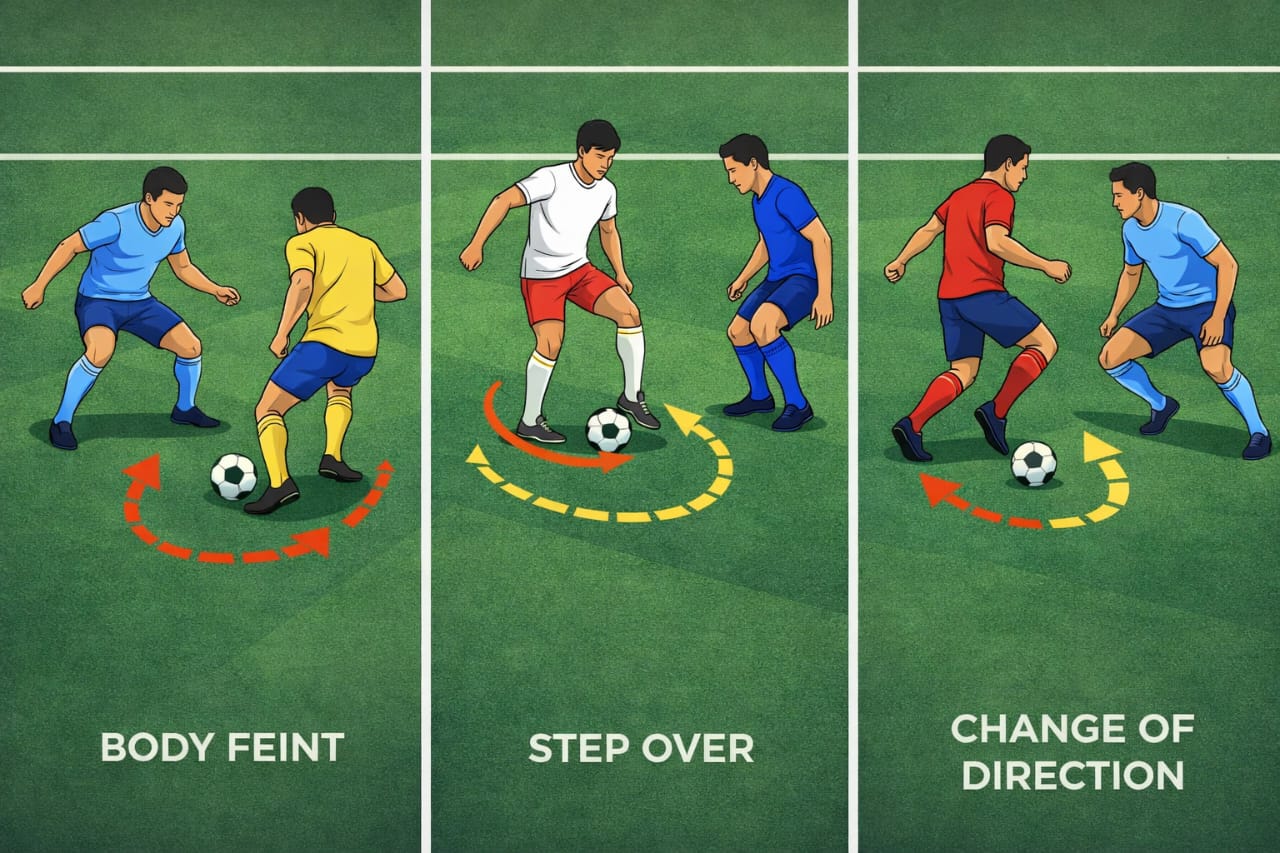
Body Feint: One of the most effective tools in 1v1 situations. The attacker shifts their body weight in one direction to force the defender to react, then quickly moves the ball in the opposite direction.
Step Over: This technique is used to disguise intent. By moving the foot around the ball, the attacker creates uncertainty, forcing the defender to hesitate.
Change of Direction: A sharp change of direction allows the attacker to exploit the defender’s balance. Once the defender commits, even slightly, the attacker can attack the open space.
These techniques are effective because they target the defender’s balance rather than relying purely on speed. The goal is to make the defender react incorrectly, not just outrun them.
One of the biggest changes in modern 1v1 play is the emphasis on rhythm. The best attackers do not approach defenders at full speed immediately. Instead, they slow the situation down.
By reducing speed, the attacker forces the defender to set their stance. This creates a moment where the defender must decide how to react. As soon as that decision is made, the attacker accelerates rapidly in the opposite direction.
This “slow-fast” rhythm is what creates separation. Without it, even the fastest players can be controlled by disciplined defenders.
This concept is also seen in attacking patterns explained in final third combinations in football, where timing and quick execution break defensive structure.
1v1 situations are most common in wide areas, where wingers face full-backs with space to attack. These duels are critical because they often lead directly to crosses, cutbacks, or shots.
However, central 1v1 situations are also important. Players operating between the lines often receive the ball in tight spaces where quick decision-making and close control are required.
In both cases, the key factor is space. Without space, the attacker cannot accelerate or change direction effectively. This is why creating the right conditions is just as important as the duel itself.
1v1 situations in football are not random events. They are deliberately created through structured team play designed to isolate defenders and expose space.
One of the most effective methods is using overloads. By placing multiple players on one side of the pitch, teams force defenders to shift across. This movement creates space on the opposite flank, where an attacker can receive the ball in isolation.
This principle is explained in overloads in football, where numerical superiority is used to manipulate defensive positioning.
Once the defense shifts, the ball is quickly moved across the pitch. This rapid movement prevents defenders from resetting their shape.
This is why switching play in football is essential. It creates moments where attackers receive the ball with time and space, increasing the likelihood of a successful 1v1.
These patterns are repeated constantly by top teams. The goal is always the same — isolate the defender and force them into a direct duel.
The location of a 1v1 situation changes how it is approached.
Wide Areas: These are the most common zones for 1v1 duels. Wingers often face full-backs with space to accelerate. The objective is to beat the defender and deliver a cross or cutback.
Central Areas: These are more compact and require tighter control. Attackers rely on quick touches, body positioning, and rapid changes of direction.
In both cases, success depends on creating separation from the defender at the right moment.
Defending 1v1 situations requires discipline and patience. The best defenders do not rush into tackles. Instead, they focus on controlling space and delaying the attacker.
The most common defensive technique is jockeying. This involves staying balanced, facing the attacker, and adjusting position without committing too early.
Defenders aim to:
The defender’s objective is not always to win the ball immediately, but to prevent progression.
Winning a 1v1 does not always mean beating the defender directly. The best attackers make decisions based on the situation.
They assess:
This leads to three main decisions:
This awareness is what separates effective attackers from predictable ones.
In modern football, many attacking systems are designed to create repeated 1v1 opportunities for key players.
Wide attackers are often positioned to receive the ball in isolation, allowing them to take on defenders directly. These situations frequently lead to crosses, cutbacks, or shots.
This is closely linked to cutbacks in football, where beating a defender opens space for a final pass into a dangerous central zone.

Once the defender is beaten, the entire defensive structure is forced to react, creating additional opportunities for attackers.
Improving 1v1 ability requires training that reflects real match conditions. Players must develop both technical skills and tactical awareness.
Effective training methods include:
These exercises help players improve their ability to make decisions quickly and execute under pressure.
1v1 situations in football are one of the most effective ways to break down defensive structures. While tactics create the opportunity, individual execution determines the outcome.
Teams that consistently create and win these duels gain a significant advantage, turning isolated moments into goal-scoring opportunities.
By combining tactical structure, intelligent movement, and technical ability, 1v1 situations in football remain a defining feature of modern attacking play and one of the most reliable ways to create decisive moments.