Physical Address
MICKYWORLDNG
Physical Address
MICKYWORLDNG

MICKYWORLDNG IS READER-SUPPORTED. WHEN YOU BUY THROUGH LINKS ON OUR SITE, WE MAY EARN AN AFFILIATE COMMISSION AT NO EXTRA COST TO YOU.
Switching play in football is one of the most effective tactical tools used by modern teams to break defensive structures, create space, and control the tempo of the game. At its core, switching play refers to moving the ball quickly from one side of the pitch to the other, forcing the opposition to shift and often exposing gaps in their shape.
In modern football, defensive systems are compact and highly organised, so attacking repeatedly through the same area quickly becomes predictable.
The concept is closely linked to structured positioning. Teams that apply positional play in football are better equipped to switch play effectively because players are already spread across key zones of the pitch, ensuring width and balance.
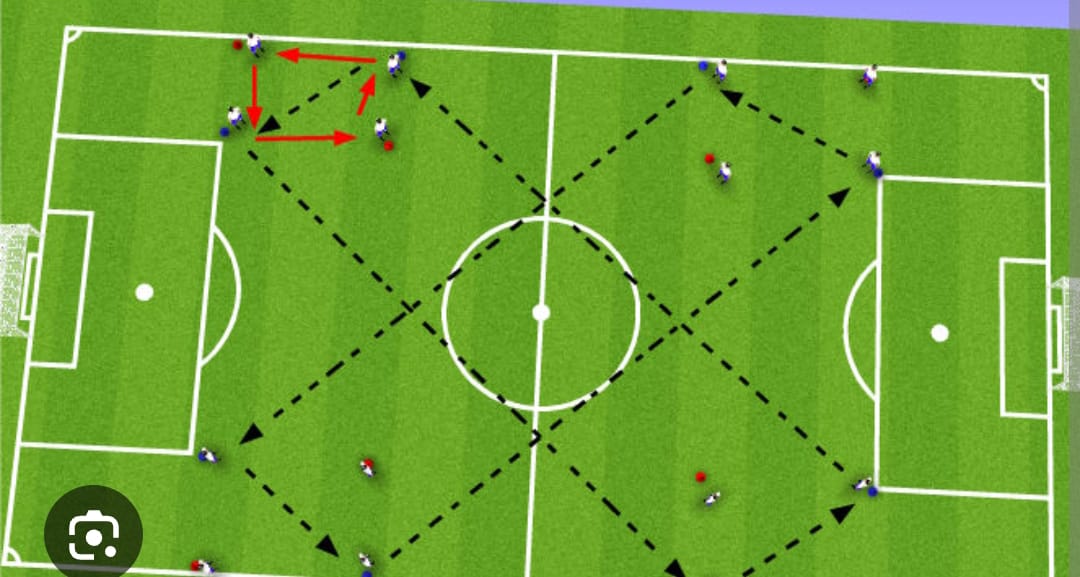
Switching play involves transferring possession from one flank to the opposite side, either through long diagonal passes, quick combinations, or controlled circulation. The goal is simple: move the opponent out of position and attack the space that opens up.
This can happen in different ways:
Long Diagonal Passes: A direct switch using a long ball, often played by centre-backs or deep midfielders.
Short Circulation: A series of quick passes that gradually move the ball across the pitch.
Driven Switches: Fast, low passes that travel quickly to the far side, reducing defensive reaction time.
Regardless of the method, the intention remains the same—shift the defensive block and exploit the weak side.
Modern football is dominated by compact defensive shapes. Teams defend with narrow lines, close distances between players, and coordinated pressing systems. While this makes central penetration difficult, it also creates opportunities on the opposite side of the pitch.
This is where switching play becomes crucial.
1. Exploiting Weak-Side Space: When the ball is on one side, the opposition naturally shifts toward it. This leaves the far side less protected. A quick switch allows attackers to receive the ball in more space, often facing fewer defenders.
2. Breaking Defensive Compactness: Compact teams rely on staying organised and close together. Switching play forces them to constantly adjust, increasing the chances of errors in positioning.
3. Creating 1v1 Situations: A well-timed switch often isolates a winger or full-back against a single defender, creating favourable attacking scenarios.
4. Increasing Tempo and Unpredictability: Switching play adds variation to attacking patterns, making it harder for opponents to anticipate the next move.
Switching play rarely happens randomly. In most cases, teams first concentrate players on one side to draw the opposition in. This is known as creating an overload.
By building numerical superiority in a specific area, teams force the opponent to commit more players to that side. Once the defensive block shifts, the opposite side becomes vulnerable.
This principle is explained in detail in overloads in football, where teams intentionally create 3v2 or 4v3 situations to manipulate defensive positioning.
After attracting pressure, the switch is executed quickly to exploit the newly created space.

Before executing a switch, teams often use quick passing combinations to maintain possession and manipulate the opposition. These combinations help to lure defenders out of position while keeping control of the ball.
One of the most effective methods involves third man runs in football, where a third player becomes the key link in progressing play. This allows teams to escape pressure and create the right moment to switch the ball.
These movements are crucial because they prevent rushed decisions. Instead of forcing a switch under pressure, teams create the ideal conditions before executing it.
Not every player is suited to switch play effectively. It requires vision, technique, and awareness.
Centre-Backs: Often initiate switches with long diagonal passes due to their deeper positioning and time on the ball.
Deep Midfielders: Act as playmakers who can control tempo and distribute the ball across the pitch.
Full-Backs: In modern systems, inverted full-backs can step into midfield and become key distributors.
Goalkeepers: Increasingly involved in build-up play, goalkeepers can act as an extra passing option to facilitate switches.
The involvement of multiple roles ensures that switching play is not predictable and can occur from different areas of the pitch.
Switching play is not just about passing ability—it is about timing. A poorly timed switch allows defenders to recover, reducing its effectiveness.
The best moments to switch play include:
– When the opposition is heavily overloaded on one side
– When a wide player is isolated on the far side
– When the defensive line is shifting laterally
– Immediately after escaping pressure
Speed is critical. The faster the ball moves, the less time defenders have to reorganise.
At the highest level, switching play is not just a technique but a coordinated team action that combines structure, movement, and decision-making. It connects directly with how teams stretch the pitch and attack space, which will be explored further in Part 2.
Switching play in football is only effective when teams maintain proper width and depth. Without these two elements, the pitch becomes congested, and the impact of a switch is reduced.
Width ensures that players are positioned close to the touchlines, stretching the defensive shape horizontally. Depth, on the other hand, pushes the opposition backward and creates vertical space between defensive lines.
This balance is explained in width and depth in football, where teams are structured to occupy both horizontal and vertical spaces effectively. When these principles are applied correctly, switching play becomes far more dangerous because the receiving player has both space and forward options.
Without width, there is no space to switch into. Without depth, there is no threat after the switch.

Switching play becomes even more decisive in the final third, where defensive blocks are at their most compact. Teams often defend with numbers behind the ball, making central penetration difficult.
In these situations, switching play serves two key purposes.
Creating Crossing Opportunities: A quick switch can find a wide player in space, allowing them to deliver crosses into the box before defenders can recover.
Isolating Defenders: Wingers or attacking full-backs can receive the ball in 1v1 situations, increasing the chances of beating their marker.
The speed of execution is critical. A slow switch allows the defence to shift across, reducing the advantage. A fast switch, however, forces immediate defensive reactions and often creates gaps.
Switching play is not only about moving the ball sideways—it can also break defensive lines when executed with precision.
When a team switches play quickly, it can bypass multiple defenders at once, especially if the ball travels diagonally into advanced areas. This creates immediate attacking opportunities.
This idea connects with breaking the lines in football, where passes are used to eliminate defensive structure and progress play into dangerous zones.
A well-executed switch can turn controlled possession into a direct attacking situation within seconds.
Switching play requires intelligent decision-making. Players must constantly assess whether the switch will create an advantage or simply recycle possession.
Key factors include:
– The positioning of the opposition block
– The availability of space on the far side
– The timing of teammates’ movements
– The speed of execution
Elite players scan the pitch early, allowing them to execute switches quickly and accurately.
While switching play focuses on attacking, teams must also maintain defensive balance. Losing possession after a switch can leave large spaces exposed.
This is why rest defence in football is essential. Teams keep a structured shape behind the ball to deal with transitions.
This allows them to control counter-attacks and recover quickly if the attack breaks down.
Manchester City under Pep Guardiola frequently use quick switches of play to exploit space on the opposite flank. After drawing opponents toward one side through short combinations, they move the ball rapidly across the pitch to isolate wide players in space.
This approach allows them to attack disorganised defensive structures and create consistent crossing or cutback opportunities in the final third.
Switching play has evolved into a more dynamic and structured concept in modern football.
Goalkeeper Distribution: Goalkeepers now help switch play under pressure.
Inverted Full-Backs: These players create new passing angles from central areas.
Quick Ball Circulation: Teams move the ball faster to destabilise defensive blocks.
Trigger-Based Switching: Players recognise when the opponent is overloaded and switch immediately.
These developments make switching play more effective and less predictable.
Switching play in football remains one of the most effective ways to manipulate defensive structures and create space. By moving the ball quickly across the pitch, teams can exploit weak-side areas and generate attacking advantages without forcing play.
When combined with structured positioning, coordinated movement, and proper balance, switching play becomes more than a passing option—it becomes a key method of controlling matches and breaking down organised defences.