Physical Address
MICKYWORLDNG
Physical Address
MICKYWORLDNG

MICKYWORLDNG IS READER-SUPPORTED. WHEN YOU BUY THROUGH LINKS ON OUR SITE, WE MAY EARN AN AFFILIATE COMMISSION AT NO EXTRA COST TO YOU.
Breaking the lines in football is a key tactical principle that allows teams to progress the ball through defensive structures and move into more dangerous areas of the pitch. Instead of circulating possession without penetration, teams aim to bypass opposition lines with precise passing, movement, and positioning.
Modern football is organised around defensive lines—usually forwards, midfielders, and defenders forming compact horizontal blocks. For attacking teams, the challenge is not just keeping possession, but finding ways to move the ball through these lines at the right moment.
This is why breaking the lines has become central to modern tactical systems, particularly those built on positional play in football, where spacing and structure are used to create passing lanes.
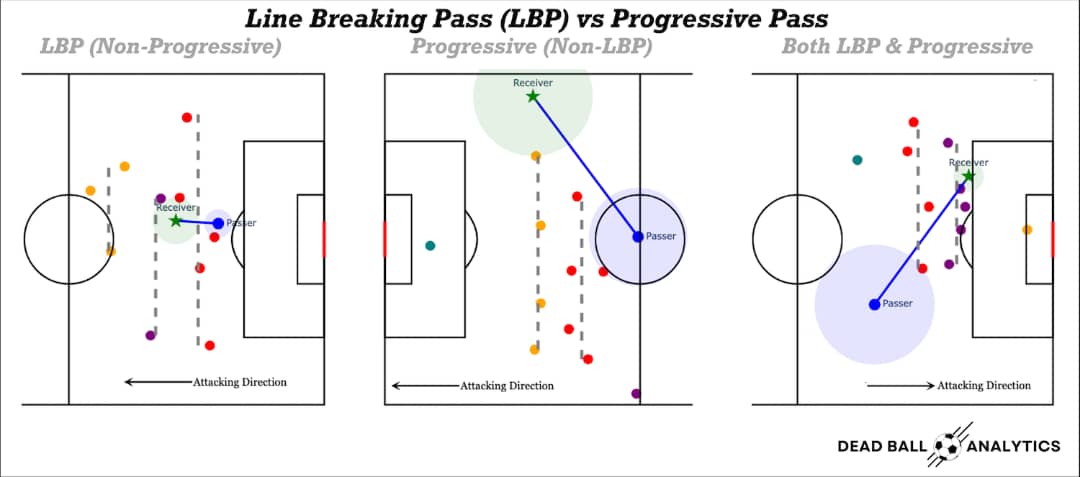
Breaking the lines refers to moving the ball past one or more defensive lines of the opponent, either through passing, dribbling, or coordinated movement.
These lines are usually organised horizontally, meaning that progression requires vertical or diagonal actions to bypass them.
For example, a pass played from defence directly into a midfielder positioned between the opposition’s midfield and defensive lines is considered a line-breaking action.
This type of progression allows teams to move closer to goal while disrupting the opponent’s structure.
Without line-breaking actions, teams often struggle to create meaningful chances. Possession becomes predictable, and the opponent can remain compact and organised.
Breaking the lines introduces speed and penetration into attacking play.
It creates forward momentum: Moving the ball beyond defensive lines brings the team closer to goal.
It disrupts defensive shape: Defenders are forced to adjust quickly, often leading to gaps.
It increases attacking options: Players receiving between lines can turn, pass, or drive forward.
This makes line-breaking one of the most effective ways to transition from build-up play into attacking phases.
Teams use different methods to break defensive lines depending on the situation.
Line-Breaking Passes: Direct passes played through or between defensive lines into advanced positions.
Dribbling Through Lines: Players carry the ball forward, bypassing opponents with movement.
Combination Play: Quick passes between multiple players to move through compact areas.
Each method serves the same goal: progressing the ball into more dangerous zones.
Breaking the lines is not just about passing ability—it depends heavily on positioning and movement.
Players must position themselves in spaces where they can receive the ball between defensive lines. These spaces are often small and require precise timing.
Creating passing lanes is essential, particularly during build-up play in football, where early progression depends on finding forward options through structured positioning.

This is why coordinated movements, such as third-man runs in football, are often used to create new passing lanes and bypass defensive pressure.
There are two main ways teams break defensive lines: vertically and diagonally.
Vertical progression involves direct forward passes that split defensive lines. This method is quick but requires precision.
Diagonal progression involves angled passes that are harder for defenders to intercept. These passes often move the ball into half-spaces or wide areas.
Both approaches are used depending on the positioning of defenders and the available space.
Width and depth play a crucial role in enabling line-breaking actions.
Width stretches the defence horizontally, creating gaps between players. Depth stretches the defence vertically, creating space between lines.
When combined, these principles make it easier to find passing lanes and progress the ball.
This connection is why breaking the lines is closely linked to width and depth in football, where space creation is essential for progression.
Timing is critical when attempting to break defensive lines.
If a pass is played too early, the receiver may be marked. If it is played too late, the passing lane may close.
Players must read the game quickly and make decisions based on the movement of teammates and opponents.
This requires a high level of awareness and understanding of the team’s structure.
Teams often struggle with line-breaking due to simple but costly mistakes.
Poor spacing: Players stand too close together, limiting passing options.
Lack of movement: Static positioning makes it easier for defenders to block passing lanes.
Forced passes: Attempting risky passes without proper support leads to turnovers.
Correcting these issues requires better coordination, positioning, and patience.
The importance of breaking the lines in football becomes even more evident in the final third, where defensive structures are compact and space is limited. At this stage, progression must be precise, quick, and well-coordinated.
Players receiving the ball between defensive lines often do so under pressure. Their ability to turn, combine, or release the ball quickly determines whether the attack continues or breaks down.

Successful teams focus on receiving in advanced pockets of space, particularly between midfield and defensive lines, where they can directly threaten goal.
Half-spaces are one of the most effective zones for line-breaking actions. These areas provide better angles for both passing and receiving, making it easier to progress the ball.
When players position themselves in these zones, they can receive the ball on the half-turn and immediately attack the defensive line.
This is why breaking the lines is closely connected to half-spaces in football, where positioning between defenders creates natural passing lanes.
Overloads are another key method for creating line-breaking opportunities. By placing more players than the opponent in a specific area, teams can create passing options that are difficult to defend.
Once the opponent is drawn toward the overloaded zone, space opens elsewhere on the pitch.
This allows teams to either play through the overloaded area or switch play to exploit the space created.
This concept is directly linked to overloads in football, where numerical superiority helps teams bypass defensive structures.
The approach to breaking the lines varies depending on the type of defensive structure faced.
Against a compact block: Teams rely on quick combinations and movement to find small gaps between lines.
Against aggressive pressing: Direct passes and quick transitions are used to bypass multiple lines at once.
Against deeper defensive setups: Patience is required, with teams circulating the ball until a gap appears.
Understanding the opponent’s defensive shape is essential for choosing the right method of progression.
Breaking the lines involves risk. Attempting forward passes in central areas can lead to turnovers if not executed correctly.
When possession is lost, teams can be exposed to counter-attacks, especially if many players are positioned ahead of the ball.
This is why line-breaking actions must be balanced with defensive structure, particularly through concepts like rest defence in football, where teams maintain stability behind the ball.
This balance ensures that even if a line-breaking attempt fails, the team is prepared to react defensively.
Top teams consistently use line-breaking actions as part of their attacking identity.
Midfielders are positioned between lines to receive passes, while defenders and deeper players focus on finding vertical passing lanes.
Movements are coordinated, with players constantly adjusting their positioning to create and exploit space.
This level of organisation allows teams to progress the ball efficiently while maintaining control.
Breaking the lines offers several tactical advantages:
Direct progression: Moves the ball closer to goal quickly.
Disrupts defensive structure: Forces defenders out of position.
Creates attacking opportunities: Opens space for shots, passes, and runs.
Increases tempo: Speeds up attacking play.
These benefits make line-breaking a key component of modern attacking strategies.
Despite its effectiveness, breaking the lines is not without challenges.
High technical demand: Requires accurate passing and control.
Decision-making pressure: Players must act quickly under pressure.
Risk of turnovers: Mistakes can lead to dangerous counter-attacks.
These challenges highlight the importance of structure, awareness, and coordination.
Breaking the lines in football has become a defining feature of modern tactical systems. As teams become more organised defensively, the ability to progress through these structures is essential.
Rather than relying on individual actions, teams now use coordinated movement and positioning to create and exploit passing lanes.
This reflects the evolution of football into a more structured and tactical game.
Breaking the lines in football remains central to how teams progress the ball and create attacking opportunities. As defensive structures become more compact and organised, the ability to move through these lines efficiently becomes even more valuable.
Teams that combine positioning, timing, and passing quality are able to disrupt defensive shapes and create space in advanced areas without forcing play.
In modern tactical systems, controlling progression through the lines is not optional—it is essential to controlling the game itself.