Physical Address
MICKYWORLDNG
Physical Address
MICKYWORLDNG

MICKYWORLDNG IS READER-SUPPORTED. WHEN YOU BUY THROUGH LINKS ON OUR SITE, WE MAY EARN AN AFFILIATE COMMISSION AT NO EXTRA COST TO YOU.
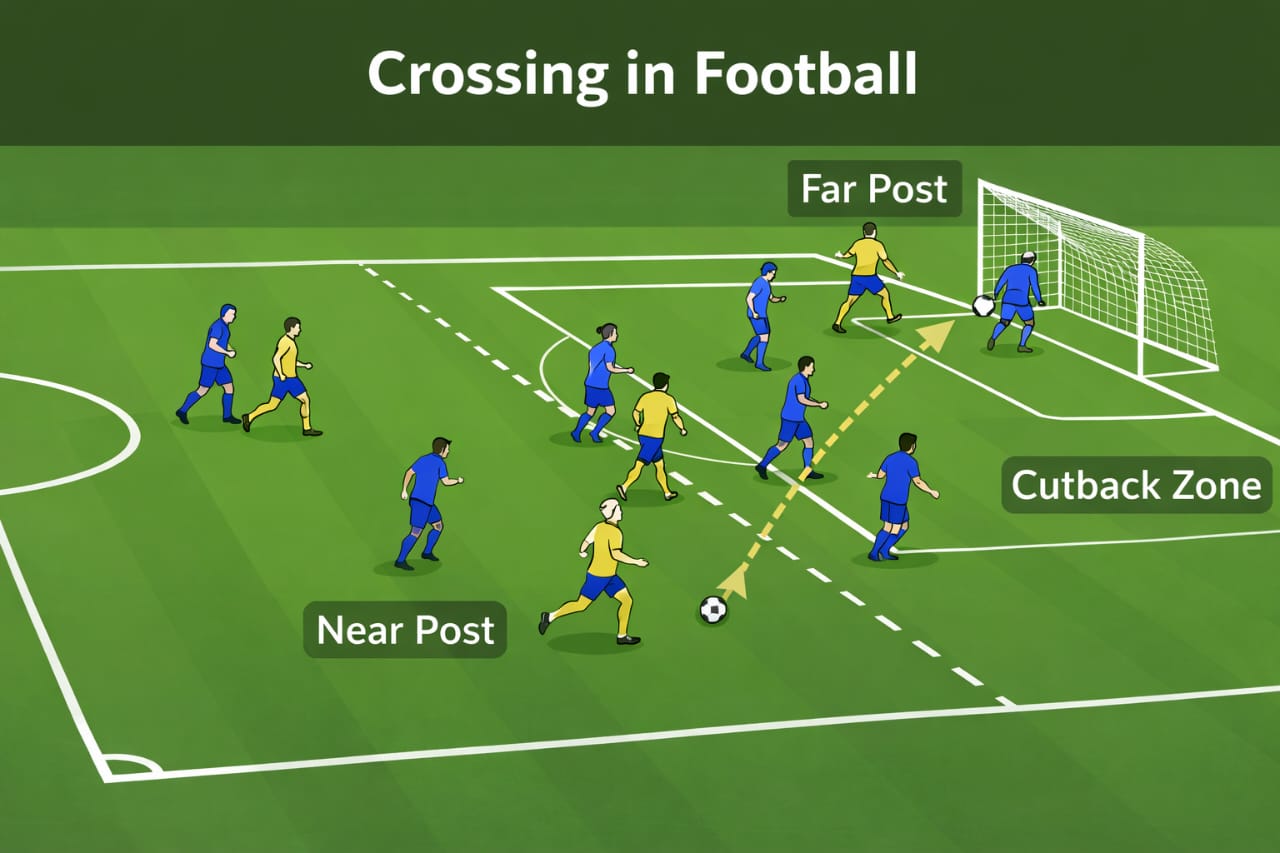
Crossing in football remains one of the most effective ways to create goal-scoring chances, but modern tactics have completely changed how and when teams use it. It is no longer about simply delivering the ball into the box. Instead, crossing is now a structured attacking tool used to exploit defensive weaknesses, create numerical advantages, and target specific zones inside the penalty area.
Top teams do not cross randomly. They create the right conditions before delivering the ball, ensuring attackers are already positioned to attack dangerous spaces. This includes stretching the pitch, manipulating defensive lines, and timing runs to meet the delivery.
It’s something you’ll start noticing in almost every match once you pay attention to how goals are created.
In many systems, crossing is part of a wider positional structure. Concepts like positional play in football ensure players occupy the correct spaces, allowing the ball to reach wide areas under control and with purpose.
Crossing in football refers to delivering the ball from wide areas into the penalty box with the aim of creating a scoring opportunity. These deliveries can vary in height, speed, and direction depending on the situation, defensive shape, and attacking movement.
However, effective crossing is not just about technique. It depends on three key elements:
Without these elements, even accurate crosses become easy for defenders to deal with.
There are different types of crossing in football, and each one serves a specific tactical purpose. The most effective teams choose the right type of cross based on the situation rather than relying on a single approach.

A lofted cross is delivered high into the penalty area, giving attackers time to position themselves and challenge in the air.
When to use: This type of cross is most effective when your team has an aerial advantage or when facing a deep defensive block that protects central areas. It is commonly used when space on the ground is limited.
Tactical value: Lofted crosses stretch the defensive line vertically and force defenders into aerial duels. They also create second-ball situations, which can lead to rebounds and additional scoring opportunities.
Key insight: Lofted crosses are less effective when attackers are static. Movement inside the box is essential to create separation from defenders.
A driven cross is played with pace across the face of goal, either along the ground or at a low height.
When to use: Best used when attackers are making fast, aggressive runs across defenders, especially during transitions or quick attacking phases.
Tactical value: The speed of the ball makes it difficult for defenders to react, increasing the likelihood of deflections, own goals, or first-time finishes.
Key insight: Driven crosses are most effective when attackers attack the near post or central zones at speed.
A whipped cross combines pace with curve, bending into dangerous areas between defenders and the goalkeeper.
When to use: Ideal when attackers are timing runs into central spaces, particularly between the penalty spot and the six-yard box.
Tactical value: This type of cross attacks space rather than players, forcing defenders to turn and react quickly. It is one of the hardest deliveries to defend because it moves unpredictably.
Key insight: Whipped crosses are most effective when delivered early enough to catch defenders moving backward.
An early cross is delivered before the attacking team fully reaches the final third or before the defense is set.
When to use: Most effective during counter-attacks or quick transitions when defenders are still recovering into position.
Tactical value: Early crosses exploit defensive disorganization and prevent defenders from establishing a compact shape.
Key insight: Early crosses are especially dangerous when forwards are already making runs behind the defensive line.
A cutback is a low pass played backward from near the byline into central areas, usually around the penalty spot.
When to use: Highly effective against compact defensive blocks where central spaces near the goal are crowded.
Tactical value: Cutbacks create high-quality chances by targeting unmarked players arriving late into the box. This is why they are a major part of modern attacking play.
Cutbacks are closely linked to structured attacking patterns, as explained in cutbacks in football, where teams deliberately create space before delivering the final pass.
Crossing in football becomes effective only when teams create the right conditions. This involves stretching the defensive shape, creating overloads, and using intelligent movement to open passing lanes.
One of the most important movement patterns is the third man run in football. This allows teams to bypass pressure, create space in wide areas, and deliver crosses without defensive interference.
For example, a winger may appear isolated, but a supporting run from a midfielder or full-back creates a passing option that leads to a crossing opportunity. This movement disrupts defensive structure and opens space for delivery.
Teams also use width strategically to stretch defenses. By keeping wide players positioned near the touchline, they force defenders to spread out, increasing the space available inside the box.
Despite the evolution of possession-based football, crossing remains a crucial attacking tool because it allows teams to attack the penalty area quickly and directly.
It is particularly effective in situations where:
Modern football has not reduced the importance of crossing — it has refined it. The difference is that today’s teams focus on quality over quantity, ensuring each cross is delivered with purpose and supported by coordinated movement.
Understanding the type of cross is only part of the picture. Where the ball is delivered is equally important in determining the outcome of the attack.
Understanding where a cross should be delivered is just as important as how it is delivered. The effectiveness of crossing in football depends heavily on targeting the right zones inside the penalty area.

Each zone presents different opportunities and requires specific types of movement from attackers.
The near post is one of the most aggressive attacking zones. It is typically targeted with fast, low, or driven crosses.
When to use: This zone is effective during quick attacks where attackers can get in front of defenders.
Tactical value: It forces defenders to react quickly and can lead to deflections, flicks, or direct finishes.
Key movement: Strikers often make sharp runs across the first defender to attack this space.
The far post is one of the most productive areas for goals from crosses. It is often targeted with lofted or deep crosses.
When to use: Best used when there is a mismatch, such as a taller attacker against a smaller defender.
Tactical value: The ball travels across the entire defensive line, making it difficult to defend consistently.
Key movement: Wingers or attacking midfielders attack the far post with late runs.
The central area around the penalty spot is one of the most dangerous zones in crossing situations.
When to use: Ideal for whipped or driven crosses where attackers can meet the ball facing goal.
Tactical value: This zone provides a balanced angle for finishing and is often less crowded than the six-yard box.
Key movement: Midfielders arriving late into the box are most effective in this area.
The cutback zone lies between the penalty spot and the edge of the box. It is one of the highest-quality chance creation areas in modern football.
When to use: Best used when the attacking player reaches the byline and pulls the ball back into space.
Tactical value: It targets unmarked players and allows for controlled finishes.
This zone is a key part of final third combinations in football, where structured attacking play creates space before the final pass.
Crossing does not happen in isolation. It is supported by tactical systems that create the right conditions for effective delivery.
Teams often create numerical advantages on the wings to open space for crossing opportunities.
This concept is explained in overloads in football, where multiple players combine to outnumber defenders and create better crossing angles.
By overloading one side, teams force defenders to shift, making it easier to reach the byline.
This approach becomes even more effective when combined with width and depth in football, which stretches the defensive structure and creates more space in wide areas for crossing opportunities.
Another effective method is switching the ball quickly from one side of the pitch to the other.
This is why switching play in football is important. It stretches the defensive shape and creates space for crosses on the opposite flank.
Quick switches often lead to isolated situations where wide players can deliver crosses without pressure.
Successful crossing in football depends on coordinated roles across the team.
Each role contributes to creating and finishing crossing opportunities.
Although crossing is effective, it should not be used in every situation.
Teams should avoid crossing when:
Choosing the right moment is just as important as the delivery itself.
Crossing in football continues to play a key role in modern attacking strategies because it allows teams to attack quickly, exploit wide spaces, and create high-quality chances.
By combining different types of crosses with intelligent movement and tactical structure, teams can consistently create scoring opportunities against even the most organized defenses.
The most successful teams are not those that cross the most, but those that understand when and where to cross, and how to support those deliveries with coordinated attacking movement.
This is why crossing in football remains a key attacking option across different tactical systems and styles of play.