Physical Address
MICKYWORLDNG
Physical Address
MICKYWORLDNG

MICKYWORLDNG IS READER-SUPPORTED. WHEN YOU BUY THROUGH LINKS ON OUR SITE, WE MAY EARN AN AFFILIATE COMMISSION AT NO EXTRA COST TO YOU.
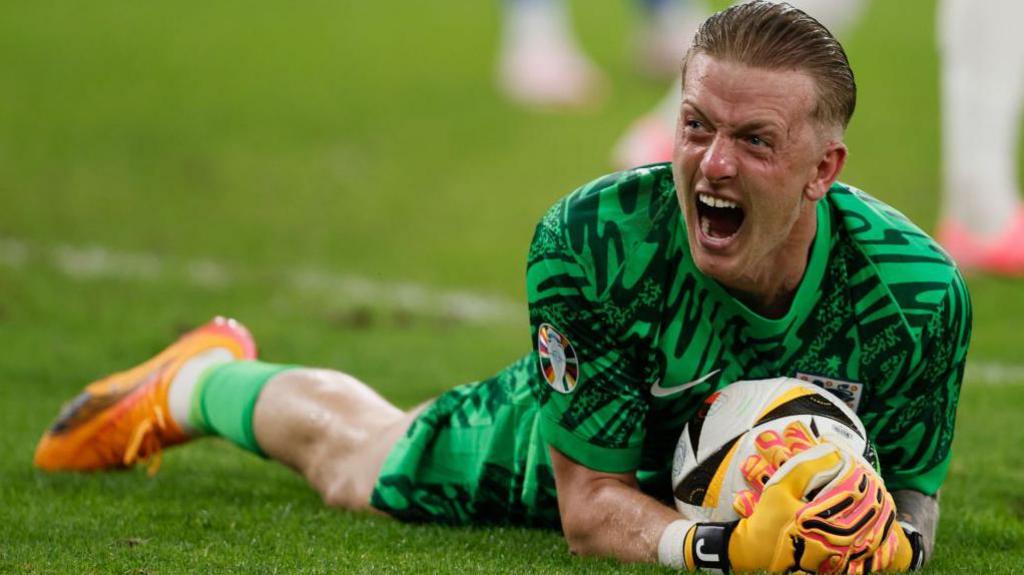
The Goalkeeper 8-Second Rule in Football introduces a clearer time limit for how long a goalkeeper may control the ball with their hands before play must restart. Designed to improve tempo and reduce time-wasting, the rule formalises enforcement that had previously been inconsistently applied under the earlier six-second framework.
Rather than relying on informal warnings, referees are now expected to monitor the countdown more visibly. If the limit is exceeded, possession is awarded to the opposing team in the form of a corner kick. The change directly affects match rhythm, defensive pressure, and game management strategies.

The Goalkeeper 8-Second Rule in Football specifies that once a goalkeeper gains full control of the ball with their hands, they must release it within eight seconds. Control typically begins when the goalkeeper is holding the ball securely and is not being challenged.
The referee may visibly count the final seconds, providing clarity for players and spectators. If the goalkeeper holds the ball beyond the allowed time, the sanction is a corner kick awarded to the opposing side.
This enforcement mechanism replaces earlier ambiguity around indirect free kicks inside the penalty area, which were rarely applied in practice.
The previous six-second provision existed in the Laws of the Game but was rarely enforced consistently. Goalkeepers frequently exceeded the time limit without sanction, particularly during moments of low pressure.
The revision to an eight-second structure aims to improve clarity rather than increase punishment. By providing a visible countdown and a clear restart procedure, the rule reduces subjective interpretation.
The adjustment also supports broader efforts to maintain match tempo and discourage deliberate delays.
The referee begins timing once the goalkeeper has clear possession and the opportunity to release the ball. Situations involving collisions, recovery after a save, or immediate pressure may influence when control is considered established Goalkeeper 8-Second Rule in Football explained.
In the closing seconds, officials may raise an arm to indicate the countdown. This visual signal creates transparency and reduces disputes over enforcement.
If the goalkeeper releases the ball within the permitted time, play continues normally.
If the eight-second limit is exceeded, the opposing team is awarded a corner kick. This restart increases potential attacking danger compared to the previously theoretical indirect free kick inside the area.
The change shifts consequences from technical infringement to territorial penalty, placing immediate pressure on the defending side.
Defenders must reorganise quickly, while attacking teams gain an advanced set-piece opportunity.
The Goalkeeper 8-Second Rule in Football encourages faster decision-making. Goalkeepers may distribute more quickly to full-backs or central defenders rather than surveying the field at length.
This adjustment favours teams comfortable building from structured positions. Those operating within organised build-up patterns can release the ball efficiently without compromising control.
Goalkeepers who hesitate or rely on slowing tempo during pressure periods may need to adapt their approach.
Sides that employ coordinated pressing can use the rule as a strategic cue. As the countdown progresses, attackers may anticipate hurried distribution.
Pressing triggers can therefore align with the closing seconds of goalkeeper possession, increasing the likelihood of forcing turnovers.
The rule interacts naturally with high defensive structures and compact midfield spacing, where timing and territory are closely linked.
Defensive units must position themselves earlier during goalkeeper possession. Delayed movement increases the risk of rushed clearances or misplaced passes.
Teams prioritising structured build-up may adjust spacing to ensure safe outlets appear immediately after a save or catch.
Clear communication between goalkeeper and defenders becomes more valuable under stricter timing control.
Under earlier law wording, goalkeepers were technically required to release the ball within six seconds. In practice, enforcement was inconsistent and rarely resulted in indirect free kicks.
The updated eight-second format trades theoretical strictness for practical clarity. By standardising the sanction as a corner kick and encouraging visible counting, the law enhances transparency.
The extended time limit also accounts for modern pressing intensity and tactical complexity.
Officials retain discretion in determining when control begins. Situations involving deflections, collisions, or contested possession may delay the start of the count.
Consistency across competitions will depend on clear communication and standard interpretation.
The rule’s effectiveness rests not only on wording but on balanced application.
By discouraging prolonged ball retention, the Goalkeeper 8-Second Rule in Football contributes to a steadier rhythm. Reduced stoppage-style delays encourage continuous play.
Over time, distribution speed may increase across all levels of competition.
The law therefore serves both competitive fairness and spectator engagement without altering fundamental gameplay structure.
The Goalkeeper 8-Second Rule in Football represents an administrative adjustment with meaningful tactical impact. While it does not change core mechanics of the sport, it formalises expectations around time management and territorial control.
By combining visible enforcement with a practical sanction, the rule aligns officiating clarity with modern game speed.
As teams continue refining pressing systems and build-up structures, adherence to the eight-second limit will remain an integral aspect of match organisation.