Physical Address
MICKYWORLDNG
Physical Address
MICKYWORLDNG

MICKYWORLDNG IS READER-SUPPORTED. WHEN YOU BUY THROUGH LINKS ON OUR SITE, WE MAY EARN AN AFFILIATE COMMISSION AT NO EXTRA COST TO YOU.
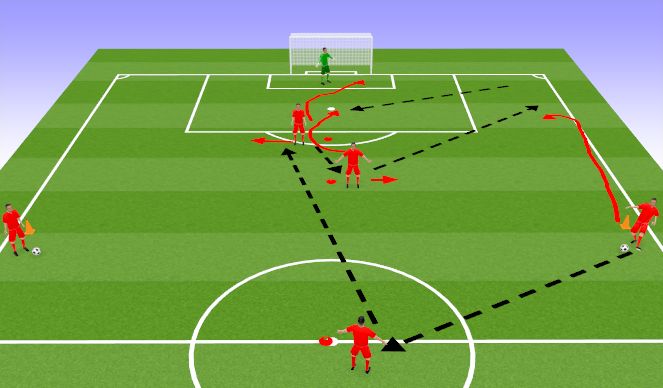
Cutbacks in football are low passes played backward from the byline or near the goal line into central attacking areas, typically around the penalty spot or edge of the six-yard box. These passes, often referred to as pullbacks, are one of the most effective ways to create high-quality scoring chances in modern football.
In today’s game, where defensive structures are compact and well-organized, traditional crosses into the box are easier to defend. Cutbacks, however, exploit the movement and positioning of defenders by targeting space behind the defensive line rather than attacking directly into it.
This is why cutbacks are closely linked to final third combinations in football, where quick passing and coordinated movement are used to break down defensive blocks.
A cutback occurs when an attacking player reaches the byline or advanced wide position and plays a low pass backward into a central area. Instead of crossing the ball into crowded spaces, the attacker targets teammates arriving late into the box.
This movement is difficult to defend because defenders are typically focused on protecting the goal and tracking runs toward the near post or six-yard box.
The key elements of a successful cutback include:
1. Penetration to the Byline: A player must break into advanced wide areas, often through dribbling, overlaps, or quick combinations.
2. Awareness of Space: The passer must identify open areas around the penalty spot or edge of the box.
3. Timing of Runs: Attackers must arrive at the right moment to meet the pass.
This simple yet effective pattern is responsible for a significant number of goals in modern football.
Cutbacks consistently produce high-quality chances because they exploit defensive weaknesses that occur naturally during play.
1. Defensive Momentum Toward Goal: Defenders naturally move toward their own goal to protect it. This creates space behind them, which cutbacks exploit.
2. Poor Visibility: When defenders face their own goal, they often lose sight of attackers arriving late into the box.
3. High-Value Shooting Zones: Cutbacks are typically delivered into central areas where the probability of scoring is much higher.
4. Reduced Pressure on the Shooter: The player receiving the cutback often has more time and space compared to receiving a traditional cross.
The most dangerous area for cutbacks is often referred to as the “cutback zone” or “golden zone.” This area lies between the six-yard box and the penalty spot.
Shots taken from this zone have a higher success rate because:
– The angle to goal is better
– The goalkeeper has less time to react
– Defenders are often out of position

Teams specifically design their attacks to deliver the ball into this area, making it one of the most important zones in modern attacking play.
Cutbacks are not effective without intelligent movement. The key to success lies in players arriving late into the box rather than already being there.
This is where concepts like third man runs in football become crucial. A player arriving from deeper positions is harder to track and often finds space unmarked.
Effective movements include:
– Late runs from midfield
– Diagonal runs from attackers
– Supporting runs from full-backs
Timing is everything. Arriving too early allows defenders to mark the attacker, while arriving too late means missing the opportunity.
Cutbacks are most commonly created from wide areas, particularly the half-spaces and channels near the byline.
Understanding half-spaces in football is important because these areas allow attackers to combine, dribble, and penetrate defensive lines more effectively than staying wide on the touchline.
From these positions, attackers can:
– Drive toward the byline
– Cut inside and pass backward
– Combine with teammates in tight spaces
This flexibility makes it difficult for defenders to predict the next action.
One of the reasons cutbacks have become more popular is their superiority over traditional crosses.
While crosses are often delivered into crowded areas, cutbacks target open space and unmarked players.
Crosses:
– Easier for defenders to clear
– Often aimed at contested aerial duels
– Lower success rate
Cutbacks:
– Target unmarked players
– Delivered along the ground
– Higher chance of creating clear shots
This difference explains why many modern teams prioritize cutbacks over traditional wide deliveries.
Creating cutback opportunities requires structure, movement, and coordination. Teams use a variety of methods to reach the byline and deliver the final pass.
These include:
– Overlapping and underlapping runs
– Quick passing combinations in tight spaces
– Dribbling to beat defenders in wide areas
– Rotational movement between attackers
These patterns ensure that teams can consistently reach dangerous positions and deliver effective cutbacks.
Cutbacks in football are not just a simple pass—they are the result of coordinated attacking play, intelligent movement, and tactical awareness. In Part 2, we will explore advanced strategies such as overloads, switching play, and width manipulation that make cutbacks even more effective in modern football.
Modern teams use multiple interconnected principles to consistently create cutback opportunities. These structures are not isolated—they work together to manipulate defensive positioning and open space near the byline.
While cutbacks may appear simple, the reality is that they are the result of carefully structured attacking systems, often built through final third combinations in football that create the conditions for penetration.
One of the most important foundations of cutback success is stretching the opposition both horizontally and vertically. This is where width and depth in football become essential.
By maintaining width, teams force defenders to spread across the pitch. At the same time, depth pins the defensive line back, creating space between defenders and midfielders.
This combination opens up channels that allow attackers to reach the byline, the key zone for delivering cutbacks.
Without proper width and depth, attacks become narrow and predictable, making cutbacks much harder to execute.
Another key tactic is shifting the ball quickly from one side of the pitch to the other. This forces defenders to constantly reposition, often creating temporary gaps.
This is why switching play in football is a critical part of modern attacking strategies.
Teams often overload one side to attract defenders before switching the ball to the opposite flank. This creates situations where the wide player has time and space to drive toward the byline and deliver a cutback.
Quick switches are especially effective against compact defensive blocks.
To consistently reach dangerous positions, teams frequently create numerical advantages in wide zones.
This approach is directly linked to overloads in football, where multiple attackers combine to outnumber defenders.
In wide areas, overloads allow teams to:
– Create 2v1 situations against full-backs
– Combine quickly to bypass defenders
– Progress the ball into the penalty area
Once the defensive line is broken, the cutback becomes the most effective final action.

Recent tactical trends show a clear increase in the use of cutbacks across top-level football. Teams such as Arsenal and Manchester City have refined this approach into a consistent attacking weapon.
1. Underlapping Runs: Instead of traditional overlaps, players now make inside runs to access the byline more directly and quickly.
2. High-Speed Combinations: Quick passing sequences are used to create “blind-side” opportunities where defenders lose track of runners.
3. Central Occupation: Midfielders are now key targets for cutbacks, arriving late into the box to finish chances.
4. Repetition of Patterns: Teams repeatedly attack the same zones, increasing efficiency and consistency.
These trends highlight how cutbacks are no longer occasional actions but a core part of attacking strategy.
These are some of the most common tactical patterns teams use to create cutback opportunities:
Pattern |
Execution |
Outcome |
|---|---|---|
Third-Man Combination |
A pass is played into a forward who lays it off for a runner attacking the box |
Creates space for a cutback into central areas |
Wide Overload |
Multiple players combine on one flank to beat defenders |
Allows penetration to the byline |
Switch of Play |
The ball is moved quickly to the opposite side |
Creates isolated 1v1 situations |
Underlapping Run |
A player runs inside the winger toward the byline |
Opens a direct angle for a cutback pass |
These patterns are trained repeatedly to ensure consistency during matches.
Despite being predictable in theory, cutbacks are extremely difficult to defend in practice.
This is due to several key challenges:
1. Body Orientation: Defenders often face their own goal, limiting their ability to track runners.
2. Multiple Threats: Attackers can target the near post, far post, or cutback zone simultaneously.
3. Speed of Play: Quick combinations reduce reaction time.
4. Late Arrivals: Midfielders arriving late are harder to mark than forwards already in position.
These factors combine to create situations where defenders are forced into reactive decisions.
Even though cutbacks are highly effective, poor execution can reduce their impact.
Common mistakes include:
– Delivering the pass too early or too late
– Poor accuracy in the final pass
– Lack of supporting runners in central areas
– Slow build-up that allows defenders to recover
To maximize effectiveness, teams must focus on timing, precision, and coordination.
Cutbacks in football have become one of the most reliable ways to create goals because they exploit space, defensive movement, and high-value shooting areas.
Rather than forcing play into crowded zones, teams use structure, movement, and timing to create clear opportunities in central areas.
This approach reflects a broader shift in modern football, where success is built on efficiency, coordination, and the ability to consistently generate high-quality chances.