Physical Address
MICKYWORLDNG
Physical Address
MICKYWORLDNG

MICKYWORLDNG IS READER-SUPPORTED. WHEN YOU BUY THROUGH LINKS ON OUR SITE, WE MAY EARN AN AFFILIATE COMMISSION AT NO EXTRA COST TO YOU.
How to play football better comes down to improving simple actions that happen in every game—your first touch, positioning, movement, and decision-making under pressure. Players who master these basics consistently perform better, regardless of skill level.
Most players struggle not because they lack ability, but because they do not understand positioning, timing, and awareness. These three things control how often you get the ball, how much time you have, and what options are available to you when you receive it.
Football moves quickly, and the difference between average and good players is often how fast they think and react. It is not always about speed or strength, but about how quickly you can read the game and execute the correct action.
If you want to become a better player, you must focus on the fundamentals that show up in every game situation. These include your first touch, passing accuracy, movement off the ball, and your ability to make quick, effective decisions.
These core elements are what separate players who simply participate in games from those who actually control and influence them. Improvement comes from mastering these basics and applying them consistently.
These small habits can improve your performance immediately, even without advanced training.
To improve in football, you need to understand what truly makes a player effective on the pitch. It is not just about technical skill or physical strength, but about how well you apply your abilities in real match situations under pressure.
A good player is always aware of their surroundings before receiving the ball. They know where teammates are positioned, where space is available, and what their next action will be before the ball even arrives.
This level of awareness is what separates reactive players from proactive ones. Instead of reacting late, they are already prepared, which gives them more time and control in every situation.
For example, players who understand playing between the lines in football can position themselves in areas that are difficult to defend, making them more effective without needing to run excessively.
This shows that becoming a better player is not only about improving what you do with the ball, but also improving your positioning and awareness without it.
Your first touch is one of the most important skills in football because it directly affects what you can do next. A good first touch gives you control and time, while a poor touch immediately puts you under pressure from opponents.
When your control is clean, you can pass, dribble, or shoot without hesitation. When it is poor, you are forced into rushed decisions, which often leads to losing possession or making mistakes.
Many players overlook this, focusing more on flashy skills, but in reality, the first touch is what allows everything else to work effectively. Without it, even simple actions become difficult.
To improve, you need to train your first touch under realistic conditions—while moving, under pressure, and using both feet. This builds confidence and consistency in real match situations.
The goal is to make your control automatic, so you do not need to think about it. This allows you to focus on your next decision instead of worrying about controlling the ball.
Passing is not just about moving the ball—it is about making the right decision at the right time. Good passing keeps the game flowing, while poor decisions slow everything down and invite pressure.
Many players lose possession because they rush passes or fail to scan the pitch before receiving the ball. This leads to predictable and easily defended actions.
To improve your passing, you must combine accuracy with awareness. Always check your surroundings before receiving the ball so you already know your next option.
This is where understanding concepts like positional play in football becomes important, as it helps you recognize patterns and passing options before they fully develop.
Good players do not wait until they receive the ball to think. They already know their next move, which makes their play faster and more effective.
One of the most common mistakes in football is standing still after passing the ball. Many players think their job is done once they release it, but this actually makes them easier to defend.
Football is a game of constant movement, and players who move intelligently are always more involved. Movement creates space, opens passing lanes, and gives teammates better options.
Even small movements, such as checking your shoulder or adjusting your position slightly, can have a big impact on the flow of play. These details often go unnoticed but are extremely important.
Good movement also makes you unpredictable. Defenders find it harder to track players who constantly adjust their position and timing.
The more you move with purpose, the more effective you become, even without touching the ball frequently.
Positioning determines how often you are involved in the game. If your positioning is poor, you will struggle to receive the ball and influence play consistently.
Good positioning means understanding where space is and adjusting your position based on the movement of the ball, your teammates, and your opponents.
It also means staying available as a passing option while maintaining the team’s overall structure. This balance is what allows teams to play effectively.
Players who position themselves well always seem to have more time on the ball because they receive it in better areas.
This is not luck—it is a result of understanding the game and anticipating what will happen next.
Football is ultimately a game of decisions, and every action you take has a consequence. The best players are not always the most athletic, but they are the ones who make the best choices consistently.
Knowing when to pass, when to dribble, and when to hold possession is what separates good players from average ones. Poor decisions often lead to losing the ball unnecessarily.
Improving your decision-making comes from awareness and experience. You need to constantly scan your surroundings and understand the situation before acting.
The faster you can process information, the more effective you become. This is what allows top players to perform well even under pressure.
Good decisions make the game easier, while poor decisions make it harder than it needs to be.
One of the biggest mistakes players make is trying to do too much. They attempt difficult actions when simple ones would be more effective.
Improvement in football often comes from doing simple things consistently well, rather than trying to force complicated plays.
Simple passes, good positioning, and quick decisions are more reliable and help maintain control of the game.
This is what makes players consistent and dependable in different situations.
When you focus on simplicity, your overall performance improves naturally, and the game becomes easier to understand and play.
To truly understand how to play football better, you must go beyond basic skills and improve how you think during the game. Decision making and awareness are what allow players to use their technical ability effectively in real situations.
Many players make mistakes not because they lack skill, but because they react too late. They receive the ball first, then start thinking, which puts them under immediate pressure from opponents.
Better players scan the pitch before receiving the ball. They already know where the space is, where their teammates are, and what their next action will be.
This habit of scanning constantly is what gives players more time on the ball, even in tight situations. It allows them to play faster without rushing.

Improving awareness starts with simple habits. Always check your surroundings before the ball arrives, and try to build a picture of the game in your mind.
The more information you gather before receiving the ball, the easier your decisions become. This is what separates calm players from those who panic under pressure.
With time, this process becomes automatic, and you start playing faster without even thinking about it consciously.
Football is not about isolated skills. Your first touch, passing, and movement must work together as one complete system. When these elements are connected, your overall performance improves significantly.
For example, a good first touch should always prepare your next action. Instead of stopping the ball randomly, your control should guide it into a position where you can pass or move immediately.
At the same time, your movement after passing should create a new option. Passing and standing still breaks the flow of play, while passing and moving keeps the game dynamic.
This combination is what makes teams difficult to defend against, because the ball and players are always moving together.

One of the best ways to improve this is by understanding movements like third man runs in football, where players create passing options through coordinated movement rather than individual actions.
This shows that football is not just about what you do alone, but how you connect your actions with your teammates.
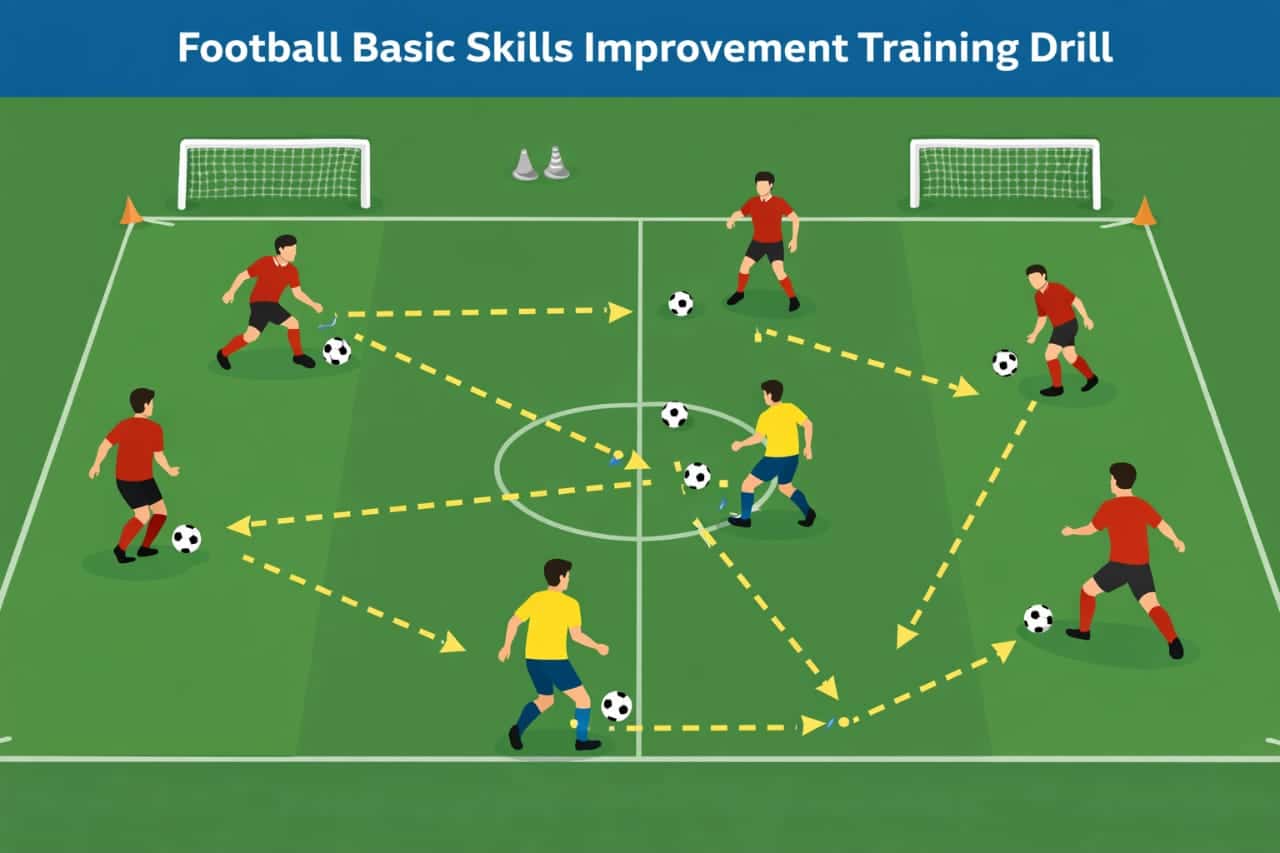
If you want to improve quickly, your training must reflect real match situations. Practicing without pressure or movement will not prepare you for the intensity of a game.
Instead of doing repetitive drills without purpose, focus on exercises that include decision-making, movement, and realistic scenarios.
For example, practice receiving the ball while under pressure, making quick passes, and moving immediately after releasing it.
This helps you build habits that transfer directly into matches, rather than skills that only work in training.
Another important factor is repetition. Improvement comes from consistently repeating the right actions until they become natural.
The more you repeat correct habits, the more confident and automatic your game becomes.
Many players struggle to improve because they focus on the wrong things. They spend too much time on advanced skills while ignoring the basics that actually matter.
One common mistake is trying to play too fast without understanding the situation. Speed is important, but only when combined with control and awareness.
Another mistake is holding onto the ball for too long. Good players know when to release the ball quickly to keep the game flowing.
Some players also ignore positioning, which makes everything harder. If you are always in the wrong place, even simple actions become difficult.
Avoiding these mistakes can improve your game faster than learning new skills.
Consistency is what separates good players from inconsistent ones. It is not about playing well once, but about performing at a steady level every time you step onto the pitch.
This comes from mastering the basics and applying them in every game situation. Simple actions done consistently are more valuable than occasional moments of brilliance.
You should aim to make fewer mistakes rather than trying to do something spectacular. Reducing errors has a bigger impact on your overall performance.
Over time, consistency builds confidence, and confidence allows you to play more freely and effectively.
Improving in football is a process that requires focus, patience, and consistency. There is no shortcut or quick fix—it comes from understanding the game and applying the fundamentals correctly.
When you improve your first touch, passing, movement, positioning, and decision-making, your overall performance naturally improves.
The key is to keep things simple, stay disciplined, and focus on doing the right things consistently.
Understanding how to play football better is about mastering the basics and applying them consistently under pressure. When your first touch, positioning, awareness, and decision-making improve, your overall game becomes faster, simpler, and more effective.