Physical Address
MICKYWORLDNG
Physical Address
MICKYWORLDNG


MICKYWORLDNG IS READER-SUPPORTED. WHEN YOU BUY THROUGH LINKS ON OUR SITE, WE MAY EARN AN AFFILIATE COMMISSION AT NO EXTRA COST TO YOU.
How to train football alone is one of the fastest ways to improve as a player, because it allows you to focus on repetition, decision-making, and real match actions without distraction. When done correctly, solo training builds the habits that directly improve your performance during games.
Many players rely too much on team training, thinking that improvement only happens in matches or organized sessions, but the truth is that the biggest development comes from the work you do alone.
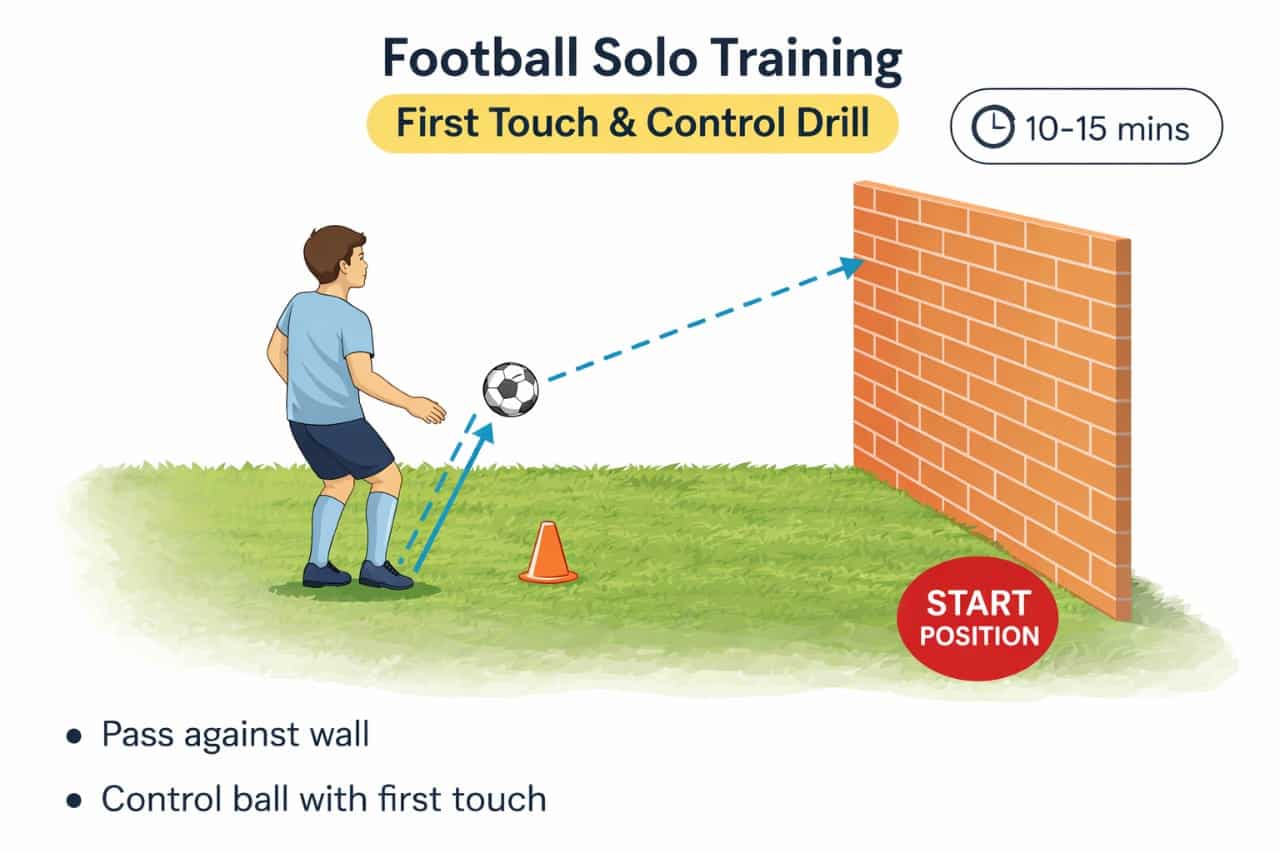
Solo training allows you to focus completely on your weaknesses, repeat actions consistently, and build habits that translate directly into real match situations. When done correctly, it becomes a system for improvement, not just practice, helping you develop faster than players who only depend on team sessions.
These simple drills help you build real match habits and improve quickly when practiced consistently.
Training alone gives you something team sessions cannot always provide—complete control over your development and the ability to focus deeply on specific areas of your game. Instead of sharing the ball with multiple players, you get hundreds of touches in a single session, which increases your familiarity and confidence with the ball.
This repetition builds consistency, and consistency is what turns average actions into automatic habits during matches. Players who train alone regularly often look more composed because they have already experienced similar situations many times in training.
Another key advantage is that you can correct mistakes instantly, instead of waiting for feedback from a coach or the next session. You are in control of your own learning process, which forces you to think, adapt, and improve actively rather than passively.
This creates a deeper understanding of the game, not just mechanical improvement. Over time, this approach builds both technical quality and football intelligence together.
Your first touch is the most important technical skill in football because it directly affects every action that follows, including passing, dribbling, and decision-making. A clean first touch creates space and time, while a poor one invites pressure and forces you into rushed decisions.
This is why elite players always look calm—they have already solved the situation with their first touch. Improving this skill alone can completely transform your performance on the pitch.
When training alone, you should not just control the ball—you should control it with intention and direction. Practice taking your first touch away from pressure, into space, and into positions that open your body to the field.
This prepares you for real match situations where you must act quickly under pressure. The goal is to make your first touch automatic so you can focus entirely on your next decision.
One of the most effective solo training methods is using a wall, because it allows you to simulate passing, receiving, and movement in a continuous sequence. Every pass you make is returned instantly, forcing you to prepare your body and mind for the next action without delay.
This creates a realistic rhythm that mirrors the speed of actual matches. It also improves your reaction time and coordination.
To maximize this drill, you should vary your passes—use both feet, change angles, and control the ball differently each time. Do not remain static after passing; always move to a new position before receiving the ball again.
This movement is similar to concepts like third man runs in football, where positioning after passing creates better options. The more realistic your movement, the more effective your training becomes.
Football is not just about what you do with the ball, but also about how you move when you do not have it, which is where many players struggle. Standing still after passing makes you predictable and easy to defend, reducing your involvement in the game.
Training alone allows you to build the habit of constant movement without relying on others. This improves your ability to stay connected to play.
Simple movements like checking your shoulder, adjusting your position, or making short directional runs can change the entire situation. These small details create space and open passing lanes that would not exist otherwise.
Players who move well always seem to have more time because they position themselves intelligently. This is closely linked to positional play in football, where space and positioning define success.
Football is not just physical—it is mental, and the best players are those who can make quick, accurate decisions under pressure. Many players train their technique but ignore their decision-making, which limits their effectiveness during matches.
This is why solo training must include thinking, not just repetition. You are training your brain as much as your body.
Before receiving the ball, imagine pressure coming from different directions and decide your next action in advance. This forces you to scan, process information, and react faster.
Over time, this improves your awareness and makes your actions more efficient. The faster you think, the better you perform in real game situations.
The biggest difference between players is not talent—it is consistency, which determines how much a player improves over time. Training once in a while will not create real progress, but consistent daily effort builds strong habits and confidence.
Even short sessions, when done regularly, produce better results than occasional long sessions. This is because repetition builds reliability.
When you train consistently, your actions become natural, and you no longer hesitate during matches. This confidence allows you to play faster and make better decisions.
Improvement becomes noticeable not just to you, but to everyone watching. This is how players move from average to advanced levels over time.
To properly understand how to train football alone, you need a clear structure that develops every part of your game instead of repeating random drills without direction or purpose. Many players train consistently but see little improvement because their sessions lack focus, progression, and connection to real match situations.
A complete solo training session should combine technical work, movement, awareness, and decision-making into one system that reflects how football is actually played. This structured approach ensures that every action you practice translates directly into better performance during matches.
Instead of repeating the same drill endlessly, divide your training into phases that target different skills while maintaining realistic intensity and focus. This makes your training more effective and prevents your development from becoming limited to only one aspect of the game.
When your training reflects real football situations, your improvement becomes faster and more noticeable over time. This is how serious players build confidence, consistency, and control.
One of the biggest mistakes players make is training technique separately from decision-making, even though both always happen together in real matches. Football is not just about executing skills, but about choosing the right action at the right moment under pressure.
This means your training must include thinking, not just repetition, to make it effective and realistic. Without this, technical improvement will not translate into actual performance.
When doing wall passes, do not just focus on passing accuracy—add a mental decision before every touch you make. Imagine pressure coming from different angles and decide whether to pass quickly, turn, or control into space.
This forces your brain to work at the same speed as your body, improving your overall effectiveness. Players who train like this always appear faster because they think before receiving the ball.

Awareness is one of the most important skills in football, and it can be developed even when training alone through deliberate habits and mental repetition. Top players constantly scan their surroundings, gathering information before receiving the ball so they can act quickly and efficiently.
This habit allows them to stay calm under pressure and make better decisions in tight spaces. Without awareness, even technically good players struggle in real matches.
When training alone, create scenarios in your mind where opponents are pressing you from different directions. Before every touch, scan your surroundings and imagine where the pressure is coming from.
This builds a natural habit that carries into real games without conscious effort. This is closely related to playing between the lines in football, where awareness helps players operate in tight spaces.
Passing alone is not enough to improve your game—you must combine it with movement to replicate the dynamic nature of football. In real matches, players are constantly adjusting their positions to create passing angles and support teammates.
This is why standing still during training limits your development and creates unrealistic habits. Movement is what connects all actions together.
When using a wall, focus on passing and immediately moving into a new position before receiving the ball again. This creates a continuous cycle that improves your coordination, timing, and understanding of space.
It also prepares you for real match situations where you must constantly adjust your position. This type of movement reflects principles seen in third man runs in football, where movement creates new opportunities.

Speed in football is not just about how fast you run, but how quickly you can think and execute actions under pressure. The best players are those who make decisions faster than others, giving them an advantage in every situation.
To improve effectively, your training must reduce the time between receiving the ball and executing your next action. The faster you act, the more effective you become.
To improve this, limit your touches during drills and challenge yourself to play quickly and efficiently. Use one-touch or two-touch exercises to force faster thinking and better preparation.
This trains your brain to process information quickly and improves your reaction speed. Over time, this becomes natural during matches.
One challenge of solo training is the absence of real opponents, but you can create pressure by adding constraints to your drills. This allows you to simulate match intensity even when training alone.
By limiting time, space, or touches, you force yourself to make quicker decisions and execute actions faster. This makes your training more realistic and effective.
For example, set a rule that you must control and pass the ball within two seconds. This creates urgency and improves your ability to perform under pressure.
Training under constraints pushes you beyond your comfort zone. This is where real improvement happens.
The goal of solo training is not just improvement—it is performing better during real matches where decisions matter. Everything you practice must connect directly to what happens on the pitch.
If your training is unrealistic, your improvement will not translate into actual performance. This is why realism is essential.
Focus on training situations that reflect real game scenarios, including pressure, movement, and quick decisions. The closer your training is to real football, the more effective it becomes.
This approach builds confidence and consistency. Players who train this way always perform better in matches.
Improving in football requires patience, discipline, and consistent effort over time rather than quick results or shortcuts. Players who stay consistent with their training always see progress, even if it is not immediate.
This long-term mindset is what separates serious players from those who struggle to improve. Consistency is the foundation of development.
Focus on improving small details every day instead of expecting instant results. Over time, these small improvements combine to create significant progress.
This is how top players are developed. Consistency always beats intensity in the long run.
Understanding how to train football alone is about building a complete system that improves every part of your game. When you combine technique, awareness, movement, and decision-making, your training becomes powerful and effective.
This allows you to improve consistently without depending on others. You take full control of your development.
The players who succeed are those who train with purpose, discipline, and focus every day. If you apply these principles consistently, your improvement will be clear and measurable.
Over time, this will reflect in your confidence and performance on the pitch. That is the true value of training football alone.