Physical Address
MICKYWORLDNG
Physical Address
MICKYWORLDNG

MICKYWORLDNG IS READER-SUPPORTED. WHEN YOU BUY THROUGH LINKS ON OUR SITE, WE MAY EARN AN AFFILIATE COMMISSION AT NO EXTRA COST TO YOU.
How to read the game in football is one of the most important skills that separates average players from elite performers who always seem to have more time and control on the ball. It is not about reacting to what is happening, but about anticipating what will happen before it actually does, which allows players to act earlier than everyone else.
That is why some players always look like they have more time on the ball, even when they are under pressure.
The best players are constantly thinking ahead, observing movement, and positioning themselves based on what they expect rather than what they currently see. This ability allows them to play faster without rushing, make better decisions under pressure, and stay one step ahead of opponents in both attacking and defensive situations.
Reading the game is built on awareness, scanning, positioning, anticipation, and understanding patterns that repeat throughout a match. These elements combine to give players more time, better options, and greater control in every situation, even when space is limited.
Once you develop this skill, football becomes easier because you are no longer reacting late—you are already prepared before the situation unfolds. This preparation allows you to play with confidence, reduce mistakes, and influence the game more consistently.
Reading the game in football means understanding not only what is happening around you but also predicting what is likely to happen next before it becomes obvious. It is the ability to connect movement, space, and player behavior into one clear and usable picture that guides your actions.
This goes beyond simple awareness because it involves interpreting information quickly and turning it into effective decisions. Players who read the game well are not guessing—they are recognizing patterns, reading body language, and understanding tactical structures.
For example, a midfielder might notice a teammate preparing to make a forward run while a defender is slightly out of position, and they will release the pass early before the opportunity fully develops. This early action is what creates advantage in football.
It also works defensively, where a player can predict where the ball will be played and intercept it before the opponent even receives it. This ability turns reading the game into a powerful tool on both sides of play.
This is why reading the game is often described as football intelligence, as it allows players to control situations instead of reacting to them.
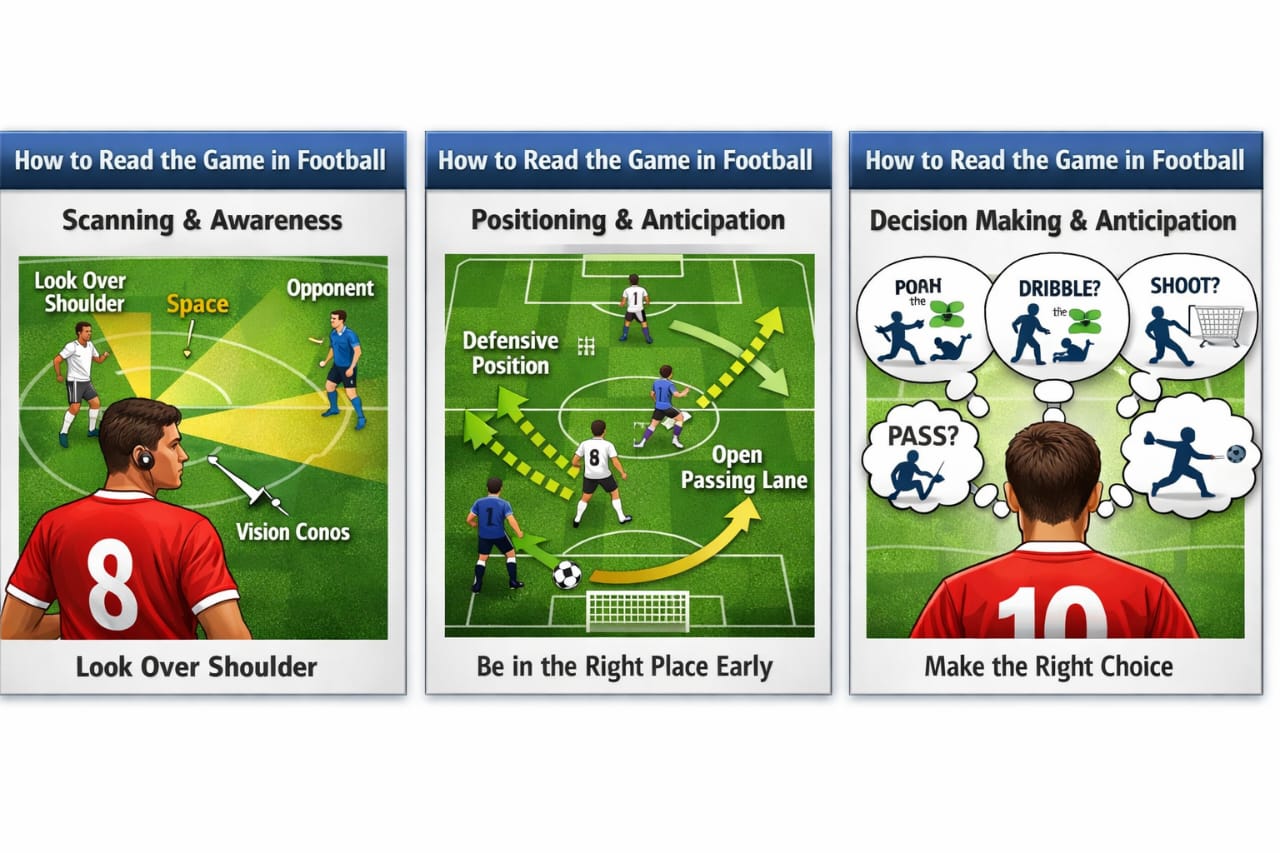
Top players constantly check their surroundings by looking over their shoulders multiple times before the ball arrives, identifying pressure, space, teammates, and opponents. This habit allows them to stay prepared at all times.
The most important scan is the one just before receiving the ball, often called the “critical scan,” because it provides the most up-to-date information about the situation. This determines what the player does next.
Instead of taking extra touches to think, players who scan effectively already know whether to pass, turn, or move the ball quickly. This is why they appear calm even in high-pressure situations.
Scanning transforms awareness into preparation, and preparation is what allows players to act faster and more efficiently than everyone else on the pitch.
Anticipation is what turns awareness into real advantage, allowing players to act before situations fully develop rather than reacting after they happen. It is a key part of mastering how to read the game in football at a high level.
Players who anticipate well are constantly processing small details such as body shape, speed of movement, passing angles, and positioning of teammates and opponents. These details help them predict the next action.
For example, if a player sees an opponent shaping their body to pass wide, they can move early to intercept or press, gaining an advantage before the ball is even played. This early movement is what defines anticipation.
Instead of reacting to passes, they move early to intercept, support, or exploit space, which gives them more time and control compared to players who react late.
Anticipation is not guessing—it is built through experience, observation, and repeated exposure to similar situations during matches and training.
Football is not random, as many situations repeat themselves throughout a match, and players who recognize these patterns can predict actions before they happen. This is a crucial part of mastering how to read the game in football.
For example, defenders under pressure often pass backward, while wide players tend to receive the ball facing forward and look to attack space. Recognizing these patterns allows you to act earlier and more effectively.
Teams also follow tactical structures, meaning their movements are often predictable if you understand their system. This makes it easier to anticipate passing options and positioning.
The more football you watch and play, the more these patterns become familiar, allowing you to react faster and make better decisions naturally.
Once you start recognizing patterns consistently, you are no longer reacting—you are predicting, which is the key to controlling the game.
Positioning is one of the clearest signs of a player who understands how to read the game in football, as it allows them to be effective without unnecessary effort or constant running. Instead of chasing the game, they arrive early in the right spaces.

Players with strong positioning are always connected to the game, offering passing options in attack and closing spaces in defense. This makes them more reliable and consistent throughout the match.
This concept is closely linked to positional play in football, where players occupy specific zones to create structure and control space effectively.
Good positioning reduces unnecessary movement because players arrive early instead of reacting late, which also helps conserve energy during the game.
It allows players to influence the game more with less effort, which is a key characteristic of intelligent footballers.
Reading the game is not complete without decision-making, as every piece of information gathered must be turned into the right action at the right time. This is where awareness becomes performance.
The best players follow a simple but powerful cycle: scan, decide, and execute, which allows them to act quickly and efficiently under pressure. This process happens constantly during a match.

Players who hesitate lose their advantage because the game moves too fast, while those who decide early maintain control of the situation and dictate the tempo of play.
Understanding movement patterns such as third man runs in football improves decision-making because it helps players predict where options will appear before they become obvious.
Decision-making speed is what turns good players into great ones, as it allows them to act with confidence and precision in every situation.
Some players always seem faster and more composed, not because they are physically superior, but because they process information earlier than others. This is the true advantage of reading the game effectively.
They scan more frequently, recognize patterns quicker, and position themselves earlier, which gives them more time to act and more control over situations.
This extra time makes them appear calm under pressure, as they are already prepared before the ball arrives or the situation develops.
In reality, they are not faster—they are simply thinking and acting earlier than everyone else on the pitch.
Developing this ability takes time, but once it becomes natural, it completely changes how you see and play football.
Improving how to read the game in football does not happen by chance—it requires deliberate and consistent training that focuses on awareness, decision-making, and anticipation under realistic conditions.
Many players think this skill only develops through matches, but the truth is that you can train it daily by adding thinking and observation into your sessions instead of just repeating technical drills.
The key is to train your mind and body together, because football is not just physical—it is a thinking game played at high speed where decisions must be made quickly.
When your training includes awareness and decision-making, your improvement becomes faster and more noticeable during real matches.
One of the most effective ways to improve your game reading is by developing your scanning habit, which allows you to gather information before receiving the ball.
You can practice this alone by using simple drills such as passing against a wall while checking your shoulders before every touch to simulate match awareness.
Before the ball returns to you, quickly look left and right as if opponents are around you, then decide your next action before the ball arrives.
This builds the habit of scanning early, which is essential for faster decision-making and better control under pressure.
This type of training connects directly with how to train football alone, where structured solo drills help improve both technical and mental aspects of your game.
Decision-making improves when you train under pressure, even if you are practicing alone, by adding small challenges that force you to think quickly.
For example, when doing passing drills, you can limit yourself to one or two touches, forcing faster decisions and reducing hesitation in your play.
You can also set rules such as changing direction after every touch or switching feet constantly, which simulates unpredictable match situations.
These small constraints force your brain to process information faster, which improves your ability to react correctly during real games.
Players who train this way become more comfortable under pressure because they are used to making quick decisions consistently.
Improving how to read the game in football is not only about training on the pitch—it also involves how you watch football off the pitch.
Instead of following only the ball, you should focus on player movement, positioning, and how teams create space or close it down during different phases of play.
Pay attention to midfielders and defenders, as they often demonstrate the highest level of game reading through their positioning and anticipation.
Observe how players move before receiving the ball, how they scan their surroundings, and how they make decisions quickly under pressure.
This habit improves your understanding of patterns, which makes it easier to recognize similar situations when you play.
Your positioning improves naturally when your awareness improves, because you start to understand where you need to be before the ball arrives.
Instead of reacting late, you begin to move early based on what you expect to happen, which gives you more time and better options.
This is why players who understand how to play football better always seem more involved in the game—they position themselves intelligently.
Good positioning reduces pressure, increases involvement, and allows you to influence the game more consistently.
The more you train your awareness, the more natural your positioning becomes during matches.
Many players struggle with reading the game because they focus only on the ball and ignore everything happening around them, which limits their awareness and slows their decisions.
Another common mistake is failing to scan before receiving the ball, which forces players to react late and often results in losing possession under pressure.
Some players also rely too much on physical ability instead of improving their understanding of the game, which becomes a problem at higher levels.
Others rush their decisions without proper awareness, leading to poor choices even when they have time and space.
Fixing these mistakes requires conscious effort, repetition, and a focus on understanding the game rather than just playing it.
Training is only useful if it translates into real match performance, and this is where reading the game becomes most valuable.
During matches, focus on scanning regularly, especially before receiving the ball, so you already know your options before the situation develops.
Try to predict where the ball will go next and position yourself accordingly instead of reacting after the pass is made.
This allows you to arrive earlier, make better decisions, and stay one step ahead of opponents throughout the game.
The more you apply these habits in matches, the faster they become natural and automatic.
Improving how to read the game in football takes time because it involves developing awareness, understanding patterns, and building habits through repetition.
Unlike physical skills, this improvement is gradual and becomes noticeable over weeks and months of consistent effort.
At first, you may need to think consciously about scanning and positioning, but over time it becomes automatic and natural.
Players who stay consistent with this process always see significant improvement in their performance and confidence on the pitch.
The key is patience, repetition, and focusing on learning rather than rushing results.
At its highest level, football is not just about speed or strength—it is about understanding the game before it happens and using that knowledge to your advantage.
Players who master how to read the game in football do not just react—they control situations, make better decisions, and play with more confidence.
They always seem to have more time because they are prepared earlier, which allows them to perform consistently under pressure.
This is what separates intelligent players from average ones and what makes football more enjoyable and easier to play.
Once you develop this ability, the game slows down for you—and that is when you truly start to understand football.